

Mahalaya Paksham Palagaram - 35 Easy & Traditional Tiffin Recipes
Mahalaya Paksham Palagaram - Traditional Tiffin Recipes
Mahalaya Paksham is a very sacred 15-day period when we remember our ancestors with prayers and simple, sattvic food. It is the austerity that matters and the same goes for the foods that we choose to eat . Many families the evening tiffin or meal is eliminated. However present lives are different and persons performing tharpanam may be having medications or certain health conditions that prevents them from fasting for evening .
During these days, our kitchens become simple and traditional — no onion, no garlic, no heavy masalas — only light, easily digestible palagaram made with ingredients like raw rice, moong dal, pepper, jeera, coconut and outside products are not consumed .
In most homes, palagaram for Mahalaya was never hotel-style tiffin. It was old-fashioned, home-style preparations — Pidi Kozhukattai, soft dosais like Vellarikkai and Parangikai dosai, Puli Upma, Aval Kichadi, Godhuma Dosai and other light tiffins that are soft on the stomach and full of flavour from pepper-jeera and ghee.
I have compiled these recipes from traditional Tamil Brahmin cuisines over the years . Reciies that were all tried and cooked in my home . All recipes are made without onion and garlic, with sesame oil or ghee, just as they were made in our mothers' kitchens. There may be certain ingredients that you may or may not be using . You can adapt recipes accordingly.
I hope this small collection helps you plan your Mahalaya Paksham Palagaram menu easily and keeps our traditions alive .
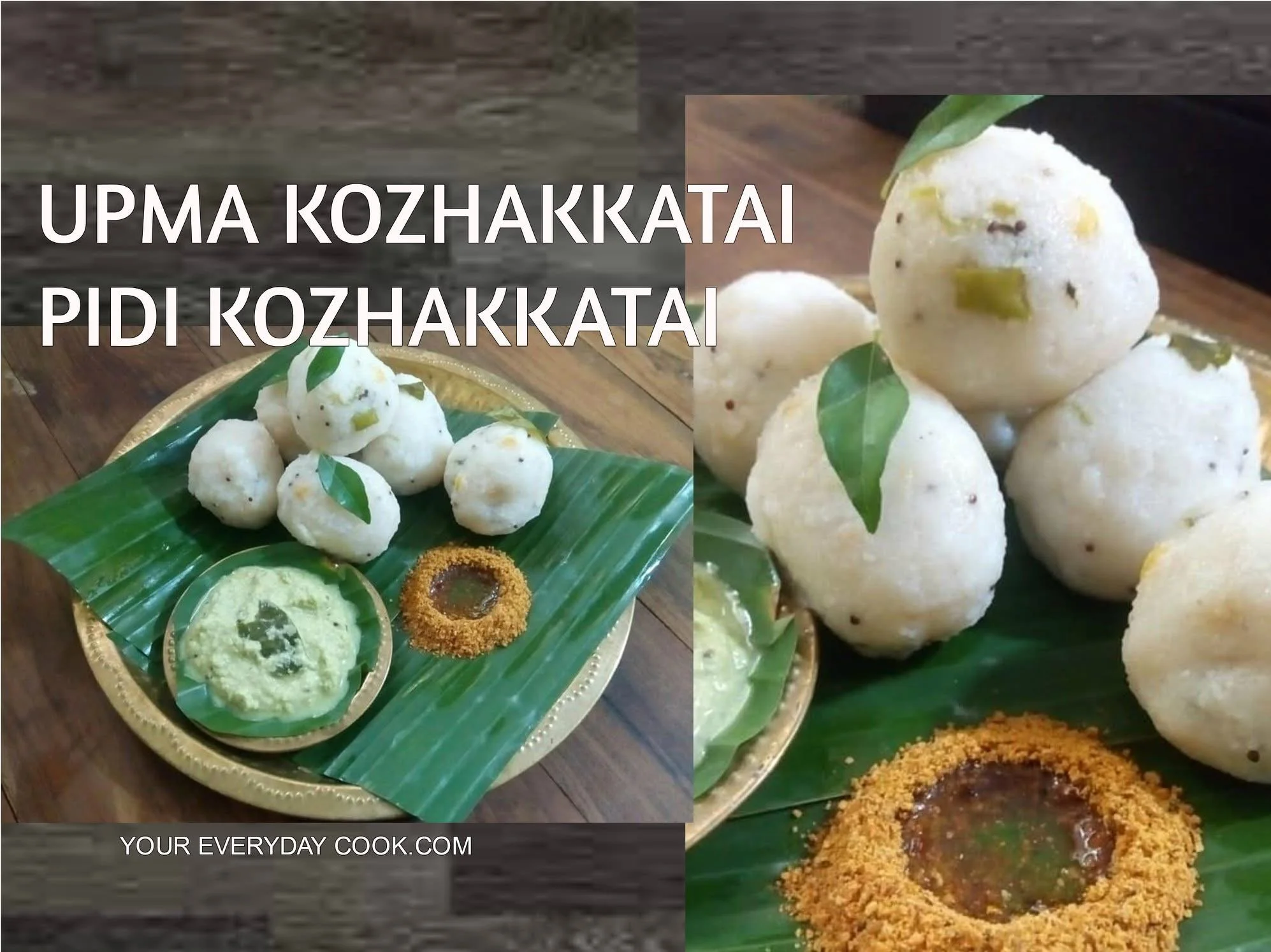
Upma Kozhukattai - Traditional Tamil Brahmin Tiffin Recipe
Upma Kozhukattai, also called Pidi Kozhukattai, is one of those old-fashioned Tamil tiffins that you won't find in hotels. It belongs to the traditional Tamil Brahmin palaharam list - soft, peppery, ghee-scented, and steamed. No onion, no garlic, totally stomach friendly .
This is also a very important recipe during Mahalaya Paksha. The kozhukattais hold their shape beautifully and make a very traditional-looking Mahalaya palaharam plate.
Upma Kozhukattai is made with coarsely ground raw rice and moong dal, cooked to a thick upma, then shaped into ovals and steamed. The steaming step gives it a soft, idli-like texture outside and keeps it light on the stomach.
Makes: 12-14 kozhukattais
Time: 30 minutes + 10 mins steaming
Ingredients
• Raw rice - 1 cup (sona masoori or any raw rice)
• Split moong dal - 2 tbsp
• Fresh grated coconut - 1/4 cup
• Black pepper - 1 tsp, coarsely crushed
• Jeera / cumin - 1 tsp
• Curry leaves - few, torn
• Asafoetida - 1/4 tsp ( can skip if you do not use during Mahalaya )
• Salt - to taste
• Ghee - 1 tsp + for greasing
• Water - 2.5 to 3 cups
Method
1. Prepare the rava:
Wash and completely dry the raw rice. Spread on a cloth . After it is dried , Coarsely grind it in a mixer to a rava-like texture — not fine flour. It should feel like semolina.
2. Roast:
On low flame, dry roast the rice rava for 2-3 minutes until it just gives off a nice aroma. Do not brown. Keep aside. In the same pan, dry roast the moong dal lightly until aromatic.
3. Cook the upma:
In a heavy-bottomed kadai, bring 2.5 cups of water to a rolling boil. Add salt, crushed pepper, jeera, curry leaves and asafoetida.
When it boils well, lower the flame and add the roasted rice rava and moong dal in a slow, steady stream, stirring continuously to avoid lumps.
Cook on low-medium flame, stirring, until the water is absorbed and it comes together as a thick, soft upma. This will take 5-6 minutes.
4. Finish:
Switch off. Add the grated coconut and a little ghee and mix gently. Cover and let it rest for 5 minutes until it is warm enough to handle.
5. Shape and steam:
Grease your palms with ghee. Take small portions and shape into neat oval / elongated balls — the classic pidi kozhukattai shape.
Arrange on a greased idli plate or steamer plate. Steam for 10-12 minutes on medium flame.
Serve hot with coconut chutney or just as is with more ghee on top.
Tips:
• If the upma feels too tight to shape, sprinkle a little hot water and mix.
• Do not grind the rice to a fine powder — the coarse texture is what gives it character.
• This kozhukattai holds its shape well, so it makes a very traditional-looking Mahalaya palaharam plate.
Tips for Perfect Upma Kozhukattai
Roasting is important: Light roasting prevents the kozhukattai from becoming sticky.
Water measure: Start with 2.5 cups. Different raw rice varieties absorb differently.
3. Shaping: Shape when warm, not hot. If it cracks, wet your palms with a little water.
Pepper-jeera: Crush them coarsely just before adding for best flavour.
Variations
• You can add 1 tbsp of chana dal along with moong dal for extra bite. During Mahalaya certain dals are avoided . You can adapt the way you wish .
• A few people add 1 tsp of grated ginger while boiling water - optional but adds flavour.
2.Kanchipuram Dosa - Temple Style Pepper Dosa Recipe
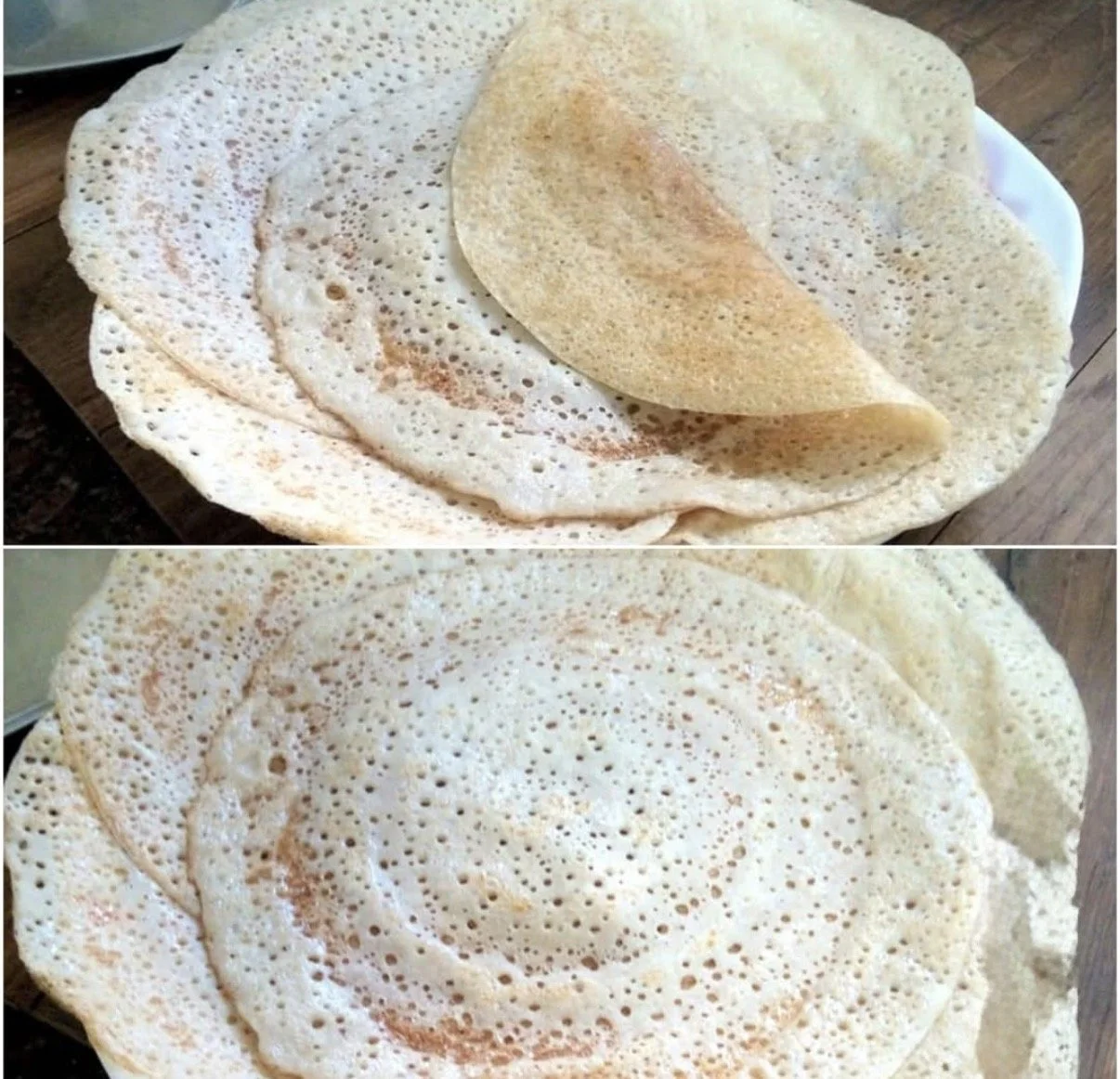
Kancheepuram idlis and Kancheepuram Dosas are yet another favourites as Palagaram . Kancheepuram dosa is not your regular paper dosa. This is a thick, soft, ghee-roasted, pepper-jeera dosa — the kind that is made as temple prasadam in Kanchipuram. It is soft and fluffy inside like a set dosa, but crisp and golden outside from the ghee.
Ingredients
For 8-10 small dosas
• Raw rice - 1 cup
• Urad dal - 1/4 cup
• Thick curd - 1/2 cup, not sour
• Black pepper - 1 tsp, coarsely crushed
• Jeera / Cumin - 1 tsp
• Ginger - 1/2 inch piece, finely chopped or grated
• Asafoetida / Hing - a generous pinch ( avoid if you are strict with ingredients that may be used during Mahalaya )
• Curry leaves - few, finely chopped
• Salt - to taste
• Ghee - to roast
• Water - as needed
Method
Step 1:
Wash raw rice and urad dal together 2-3 times. Soak them in enough water for 4 hours.
Drain and grind to a smooth, fluffy dosa batter. Add water little by little while grinding. The batter should be like regular idli-dosa batter — not too thick, not too watery.
Step 2:
Transfer to a large vessel and ferment overnight or for 8 hours. The batter will rise slightly.
Step 3:
Once fermented, add crushed pepper, jeera, chopped ginger, hing, curry leaves and salt. Mix gently.
Add little water if needed. The final batter should be thick but pourable — thicker than regular dosa batter, similar to set dosa batter. Do not make it thin.
Let it rest for 15 minutes after mixing.
Step 4:
Heat a cast-iron tawa on medium flame. It should be hot but not smoking.
Pour a ladleful of batter and do NOT spread it thin like paper dosa. Just lightly pat it to a small, thick circle — about 4-5 inches diameter. This thickness is what makes Kanchipuram dosa special.
Drizzle ghee around and on top. Cover with a lid and cook on medium flame for a minute.
Flip and cook the other side for 30 seconds until golden spots appear. The dosa should be soft inside and crisp outside.
Serving Suggestion
Serve hot with coconut chutney and milagai podi with ghee. It doesn't need sambar — the pepper and ginger flavour is enough.
Tips for Perfect Kanchipuram Dosa
1. Use raw rice, not boiled or idli rice for the authentic taste. Besides being Mahalaya , parboiled rice is not used .
2. Coarsely crush pepper and jeera just before adding.
This is a thick dosa. Don't spread the batter
5. Don't compromise on ghee.
3.Parangikai Dosai / Pumpkin Dosai - Mahalaya
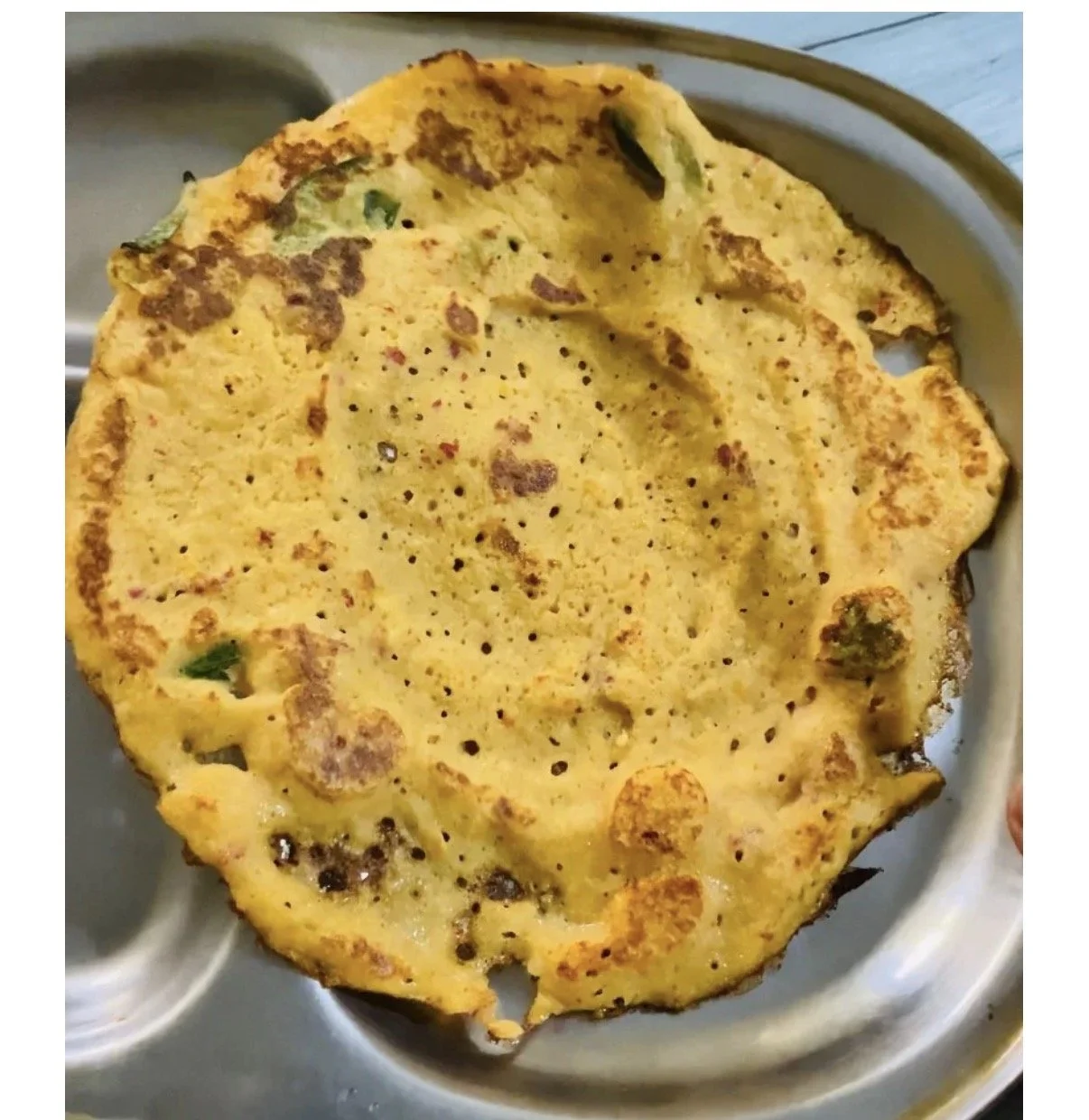
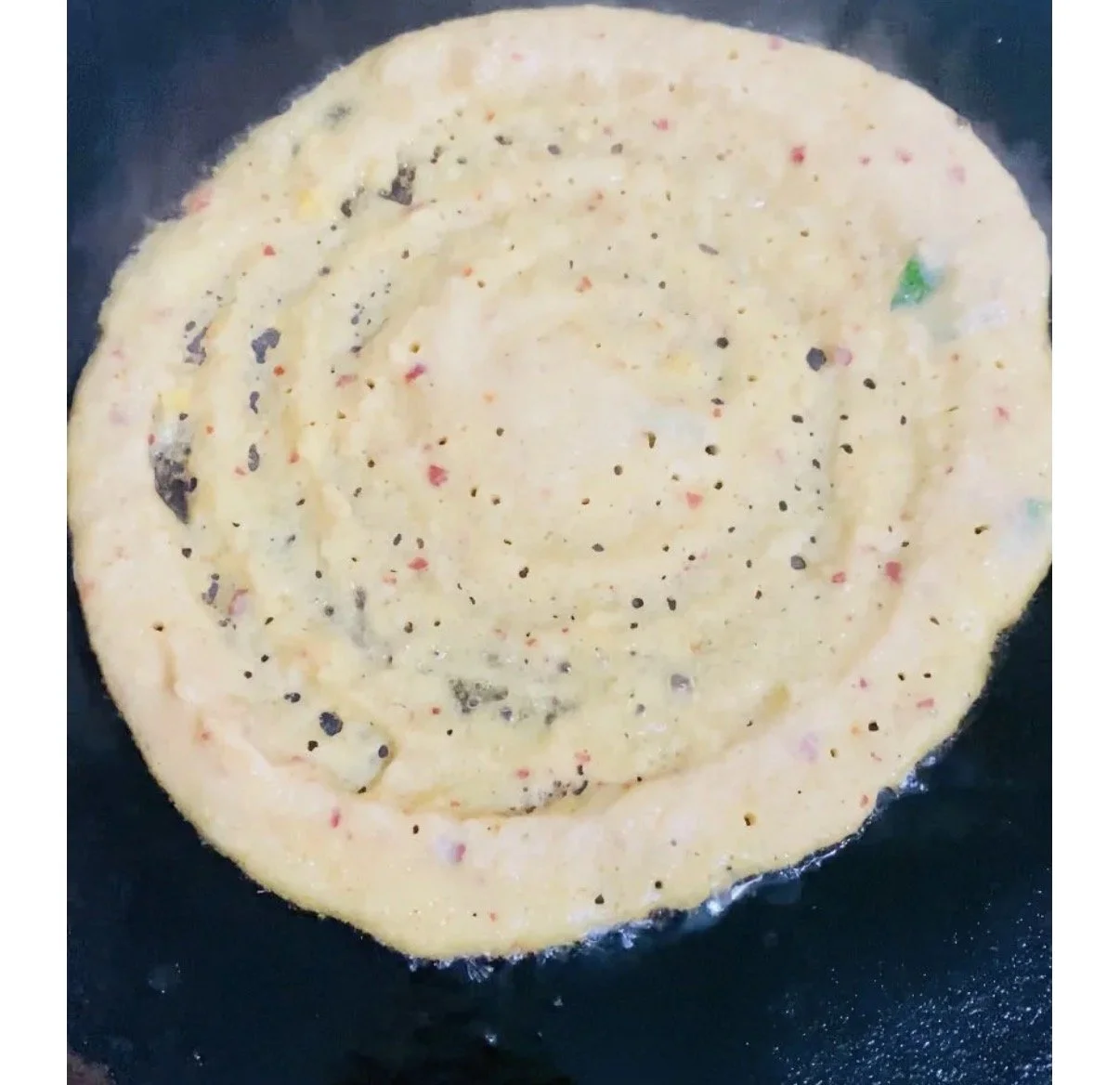
For Mahalaya, we look for palagaram that is soft, sattvic and easy to digest — without onion and garlic. This Parangikai Dosai is one such old-style palagaram.
Made with raw rice and cooked yellow pumpkin, this dosa is naturally soft, slightly sweet, and gets a beautiful golden colour. The pumpkin makes it so soft that you don't need to ferment it for long. Pepper and jeera give it flavour, and ghee gives it that festival aroma.
This is a very good option when you want to make something other than the usual upma kozhukattai and vadai for Mahalaya.
Ingredients
For 8-10 dosas
• Raw rice - 1 cup
• Yellow pumpkin / Parangikai - 1 1/2 cups, cooked and mashed (about 200g raw pumpkin)
• Fresh coconut - 1/4 cup, grated
• Black pepper - 1 tsp
• Jeera / Cumin - 1 tsp
• Salt - to taste
• Asafoetida / Hing - 1/4 tsp ( optional for Mahalaya)
• Ghee - to roast
• Water - as needed
Note: Green chilli is omitted for stricter Mahalaya palagaram. If you are making it as a regular tiffin, you can add 1 finely chopped green chilli.
Method
Step 1:
Wash raw rice well and soak in enough water for 3-4 hours.
Step 2:
Peel and chop the pumpkin into small cubes. Pressure cook or steam with very little water until soft. Mash it well while still warm. Let it cool completely. There should be no lumps.
Step 3:
Drain the soaked rice. In a mixer, grind rice along with coconut, pepper and jeera to a slightly coarse batter. Add water little by little — not too much.
Add the mashed pumpkin to this and grind again for a few seconds just to mix it evenly. The batter should be like a slightly thick dosa batter, smooth and pourable. It will have a light yellow colour.
Step 4:
Transfer to a bowl. Add salt and hing and mix well.
Let the batter rest for 1-2 hours. This resting helps it become softer. No overnight fermentation is needed because of the pumpkin.
Step 5:
Heat a cast-iron tawa on medium flame. Grease lightly with ghee.
Pour a ladleful of batter and spread gently to a slightly thick dosa — not very thin like paper dosa. Pumpkin dosa tastes best when made a little thick.
Drizzle ghee around the edges. Cook on medium flame until the bottom turns golden and the top looks cooked. Flip and cook for a few seconds on the other side.
Serving Suggestion
Serve hot with coconut chutney or thengai milagai podi with ghee. Since the pumpkin itself gives a mild sweetness, it tastes best without sambar.
This dosa stays very soft even after it cools down, so it is excellent for Mahalaya palagaram plate and for packing.
Tips
1. Use ripe yellow pumpkin, not white. It gives natural sweetness and colour. Squeeze out excess water after cooking if watery.
2. Do not make it too thin. If too thin, the dosa will stick. Thick but pourable is right.
3. Crush pepper coarsely for better flavour than pepper powder.
4. Keep flame on medium. High flame will burn the pumpkin sugars quickly.
5. Strict version: For strict Mahalaya, omit green chilli and use only pepper-jeera for spice.
Godhuma Dosai / Wheat Dosai - Mahalaya Palagaram Recipe
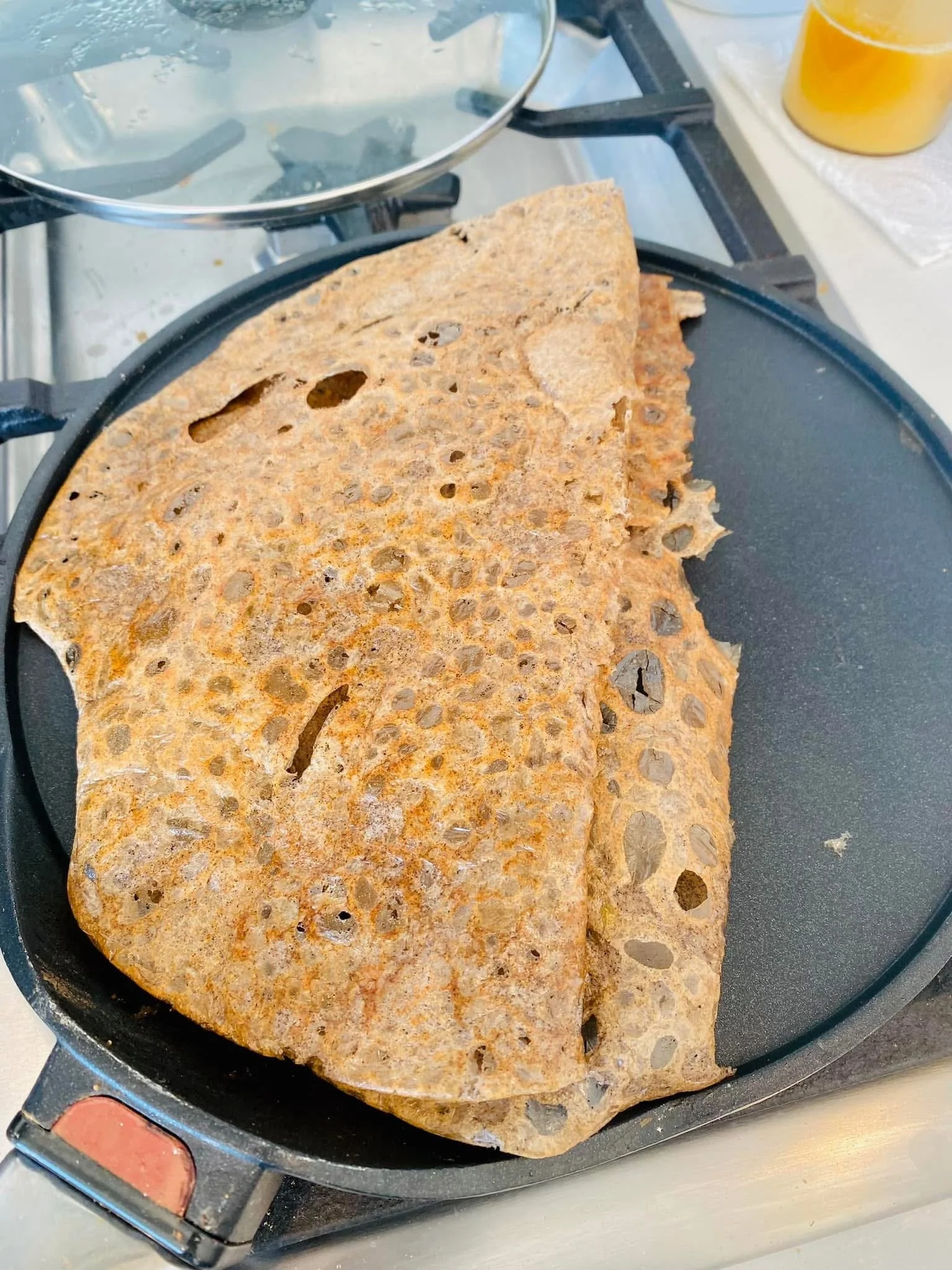
Godhuma Dosai / Wheat Dosai - Mahalaya Palagaram Recipe
When you want something light in the evening and don't want to make rice-based tiffin again, Godhuma Dosai is the perfect choice. This is a traditional tiffin found in old Tamil Brahmin recipe collections, but usually people make the instant onion-heavy version.
For Mahalaya Palagaram, we keep it completely sattvic — use just pepper, jeera, and curry leaves. It becomes very crisp, aromatic and light.
Ingredients
For 8-10 dosais
• Whole wheat flour / Godhuma mavu - 1 cup
• Rice flour - 2 tbsp (for crispness)
• Jeera / Cumin - 1 tsp
• Black pepper - 1/2 tsp, coarsely crushed
• Asafoetida / Hing - 1/4 tsp ( optional for Mahalaya)
• Curry leaves - few, finely chopped
• Salt - to taste
• Water - approx 2 to 2.5 cups
• Ghee - to roast
Method
Step 1:
In a large bowl, take whole wheat flour, rice flour, salt, hing, jeera, crushed pepper and finely chopped curry leaves. Mix well with your hand first.
Add water little by little and whisk to a thin, watery batter — just like rava dosa batter. There should be no lumps. The batter should be very thin and pourable. If it is thick, the dosa will not become crisp.
Step 2:
Let the batter rest for 20-30 minutes. This helps the wheat flour absorb water and gives a crispier dosa. After resting, check consistency and add a little more water if it has thickened.
Step 3:
Heat a cast-iron tawa very well on medium-high flame. It should be really hot — this is important for wheat dosa.
Mix the batter well each time before pouring. Do not pour with a ladle and spread like regular dosa.
Instead, pour the thin batter from the outer edge of the tawa towards the centre, filling the gaps. The batter will form a lace-like pattern.
Drizzle ghee around the edges. Lower the flame to medium and let it cook until golden and crisp and the edges leave the tawa by themselves.
No need to flip for thin dosas. If you made it slightly thick, flip and cook for a few seconds.
Serving Suggestion
Serve hot and crisp with coconut chutney or milagai podi with ghee. For Mahalaya palagaram plate, it goes well with paruppu thogayal or plain coconut thogayal.
This dosa is best eaten immediately — that is when it is crispiest.
Tips for Mahalaya Version
1. For Mahalaya, keep it strictly pepper-jeera based.
2. If tawa is not hot enough, the batter will not form laces and will become thick
3.Add more water than you think. The thinner the batter, the crisper the dosa.
4. Don't skip it — 2 tbsp rice flour is what gives that crispness to wheat dosa.
5. Use ghee instead of oil for authentic palagaram aroma.
Light, crisp, and fully sattvic — perfect for an evening palagaram during Mahalaya.
Pachai Arisi Dosai - Light Evening Palaharam Recipe
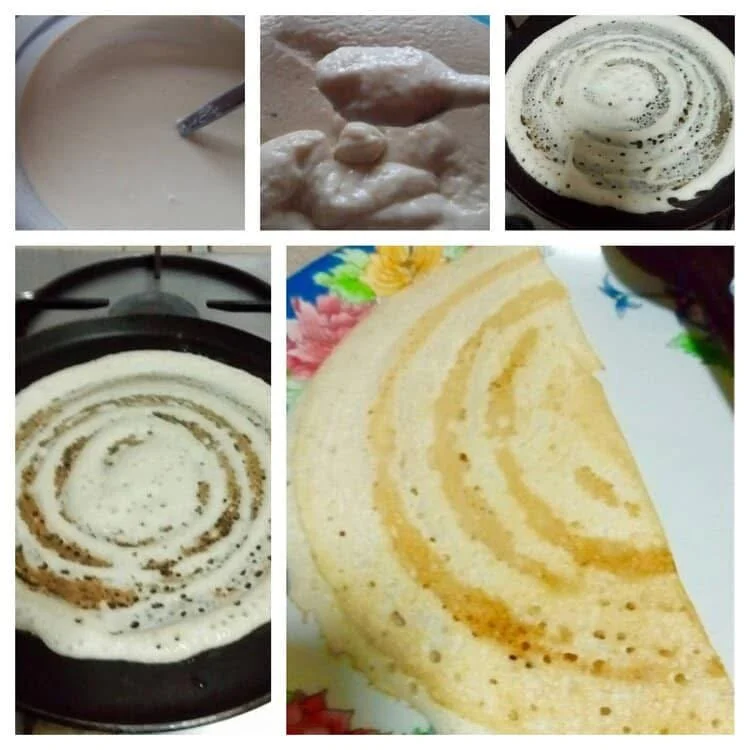
Pachai Arisi Dosai - Light Evening Palaharam Recipe
Pachai Arisi Dosai is one of the simplest dosas from our traditional tiffin collection — made only with raw rice, a little urad dal and fenugreek.( skip if you are following strict Mahalaya guidelines) No fancy ingredients, no grinding of coconut, just a clean, light dosa that is perfect for a light evening palaharam.
Because it is made with raw rice, it comes out thin, slightly crisp, and very easy to digest. That is why it is often made when you want something light after a heavy afternoon meal.
Ingredients
For 10-12 dosas
• Raw rice / Pachai arisi - 1 cup
• Urad dal - 1/4 cup
• Fenugreek seeds / Vendhayam - 1/2 tsp ( optional ) for replacing grind with 2-3 tbsp grated coconut.
• Salt - as needed
• Sesame oil or ghee - for roasting
• Water - as needed
Method
Step 1: Soak
Wash raw rice, urad dal and fenugreek seeds / or coconut, together 2-3 times. Soak them together in enough water for 3-4 hours.
Step 2: Grind
Drain the water and grind with just enough fresh water to a smooth, flowing dosa batter. Don't add too much water at once — add little by little. The batter should be smooth, not coarse.
Step 3: Ferment
Add salt, mix well and allow the batter to ferment overnight or for 8 hours. In winter it may take a little longer.
Step 4: Make the dosa
The next day, mix the batter gently. If it has become thick, add a little water. This batter should be reasonably thin — thinner than idli batter, like regular dosa batter.
Heat a dosa tawa on medium flame and lightly grease it.
Pour a ladleful of batter in the centre and spread it into a thin dosa in circular motion.
Drizzle a little sesame oil or ghee around the edges. Cook on medium flame until the underside turns golden and the edges start to leave the tawa.
Flip briefly for a few seconds if you like it crisp on both sides. For a softer version, take it off without flipping.
Since it is a very light dosa, avoid heavy sambar — a simple thuvaiyal or chutney is enough.
Tips
Raw rice only: Use raw rice / sona masoori for this dosa, not idli rice or boiled rice. That gives
Batter consistency: Keep it thin and smooth. Thick batter will make the dosa thick and hard.
Tawa heat: Tawa should be medium-hot. Too hot and it will brown before cooking, too low and it will stick.
Oil or ghee: Sesame oil gives a traditional flavour, ghee gives a richer aroma — both work well.
A very simple, old-style dosa that is light on the stomach and perfect for a light evening tiffin.
Vellarikkai Dosai / Cucumber Dosai - Mahalaya Paksham Palagaram
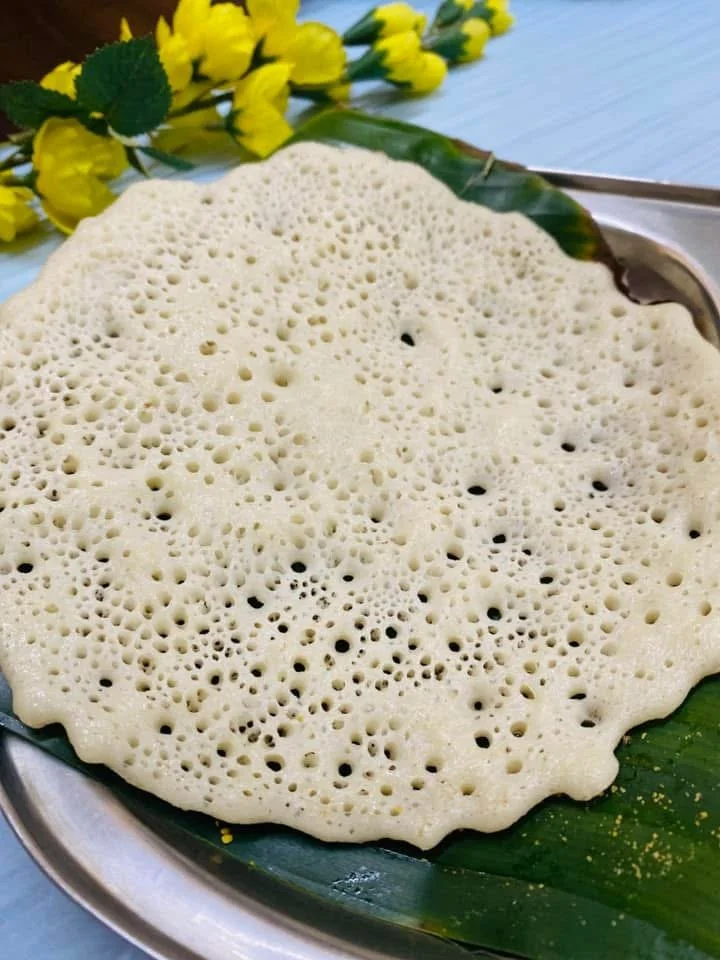
6.Vellarikkai Dosai / Cucumber Dosai - Mahalaya Paksham Day 2 Recipe
Vellarikkai Dosai is a soft, slightly thick dosa where cucumber gives a lovely mild, cooling flavour. It is not a crisp, paper dosa — it is meant to be soft, fluffy and light.
It is sattvic, easy to digest, and made without onion and garlic, which makes it perfect for Mahalaya palagaram.
Ingredients
For 8-10 dosas
• Raw rice - 1 cup
• Urad dal - 2 tbsp
• Fresh coconut - 1/4 cup, grated
• Cucumber / Vellarikkai - 1 medium (about 1 cup grated)
• Jeera / Cumin - 1 tsp
• Black pepper - 1/2 tsp
• Salt - as needed
• Ghee - for making dosai
Method
Step 1: Soak
Wash raw rice and urad dal together and soak in enough water for 3-4 hours.
Step 2: Grind
Drain and grind them together with fresh coconut, jeera and pepper to a smooth batter. Add water little by little. The batter should be slightly coarse, not super fine — similar to a soft dosa batter.
Step 3: Prepare cucumber
Peel the cucumber, deseed if the seeds are large, and grate it.
Gently squeeze out only some of the excess water — don't squeeze it fully dry. That little cucumber water keeps the dosa soft.
Step 4: Mix and rest
Mix the grated cucumber into the batter along with salt. Combine well.
Allow the batter to rest for about 1 hour. No overnight fermentation is needed. The cucumber itself makes it soft.
Step 5: Make the dosa
Heat a tawa on medium flame and grease lightly with ghee.
Pour a ladleful of batter and spread it into a slightly thick dosa — not very thin like raw rice dosa. Thick is the key here.
Cover with a lid and cook on medium heat. The steam will help the cucumber cook and keep the dosa soft.
When the top looks cooked and the underside is lightly browned, flip it over briefly for a few seconds.
Serve hot with:
• Coconut-pepper chutney
• Thengai milagai podi with ghee.
Aval Khichadi
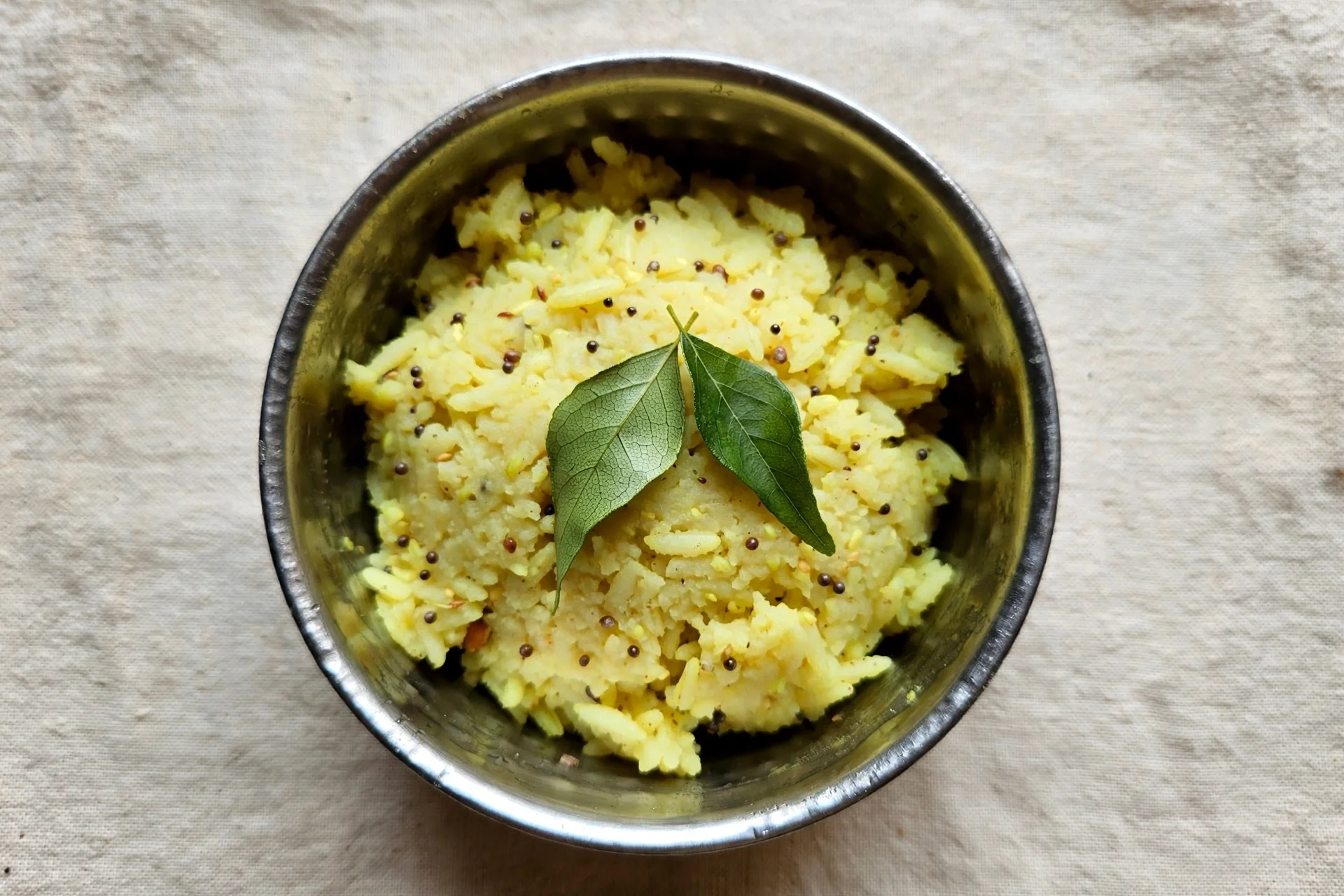
7.Aval Kichadi - Mahalaya Paksham Day 4 Recipe
Aval Kichadi is a very soft, gentle stomach friendly kichadi made with aval and moong dal. It is not dry like upma — it is meant to be moist, soft and light, almost like a pongal but lighter.
It is very easy to digest and very sattvic, which is why it is included in the traditional Mahalaya Paksham list for Day 4. It is perfect for an evening palagaram or a light dinner during Mahalaya.
Ingredients
For 2-3 people
• Thick aval / Poha - 1 cup
• Payatham paruppu / Split moong dal - 2 tbsp
• Fresh coconut - 1/4 cup, grated
• Jeera / Cumin - 1 tsp
• Black pepper - 1/2 tsp, coarsely crushed
• Hing / Asafoetida - a pinch
• Curry leaves - few
• Salt - as needed
• Ghee - 1 to 2 tsp
• Water - about 1 1/2 to 2 cups
Method
Step 1: Prepare aval and dal
Wash the thick aval quickly in water and drain it completely in a colander. Do not soak it for a long time, aval will become mushy. Just wash and drain.
In a dry kadai, lightly roast the moong dal until you get a nice aroma. Don't brown it.
Step 2: Temper
Heat 1 tsp ghee in the same kadai. Add jeera, crushed pepper, hing and curry leaves. Let it splutter.
Step 3: Cook dal
Add the roasted moong dal to the tempering. Pour in about 1 1/2 cups water and cook on medium flame until the dal is almost soft — not fully mashed, but just cooked.
Step 4: Add aval
Now add the drained aval and salt. Mix gently without breaking the aval.
Cook on low flame, stirring gently once or twice, until the aval becomes soft and absorbs all the water. If it looks too dry, sprinkle a little hot water. The final texture should be soft and moist, not dry like regular upma.
Step 5: Finish
Switch off. Add grated coconut and another small spoon of ghee. Mix gently and cover for 2 minutes.
Good Accompaniment
Tips
1. Use thick aval: Don't use thin aval — it will become paste. Thick aval holds shape.
2. Don't soak aval: Just wash and drain. Soaking makes it soggy.
3. Moist, not dry: The finished kichadi should be soft and moist like ven pongal. If dry, sprinkle hot water and cover.
4. Pepper-jeera: Crush pepper coarsely just before adding for best flavour for Mahalaya palagaram.
5. Ghee: Don't skip the final ghee — it brings everything together.
8.Payatham Paruppu Dosai / Moong Dal Dosai - No Fermentation Dosa
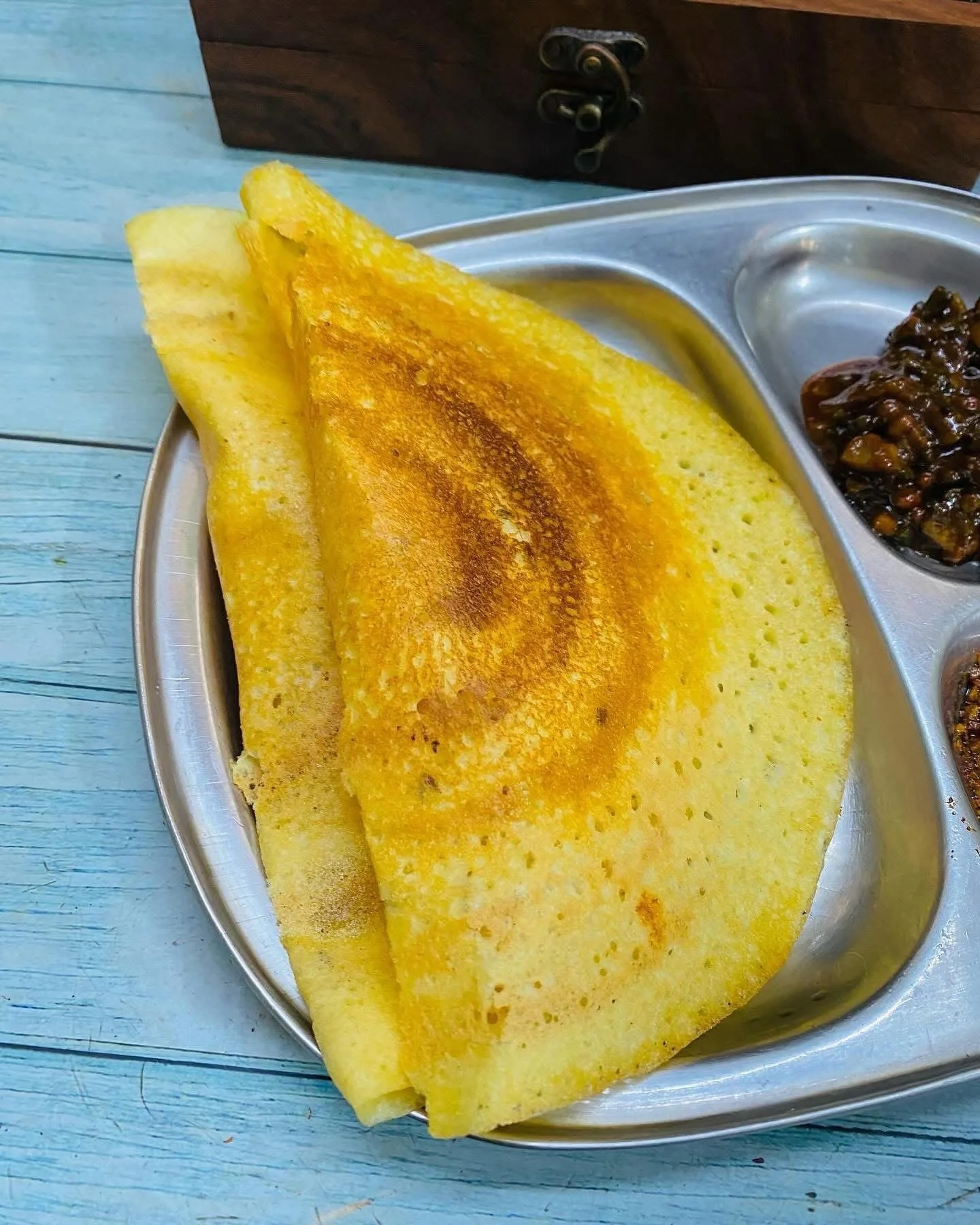
Payatham Paruppu Dosai / Moong Dal Dosai - No Fermentation Dosa
Payatham Paruppu Dosai is a light, pepper-jeera dosa made with raw rice and moong dal. Unlike regular dosa, this version needs no lengthy overnight fermentation, so you can make it the same day.
It comes out crisp around the edges, soft inside, and very aromatic because of crushed pepper, jeera and hing. It is also naturally sattvic — perfect for a light tiffin when you want something easy to digest.
Ingredients
For 10-12 dosas
• Raw rice - 1 cup
• Payatham paruppu / Split moong dal - 1/2 cup
• Black pepper - 1 tsp, coarsely crushed
• Jeera / Cumin - 1 tsp
• Hing / Asafoetida - a pinch
• Curry leaves - few, finely chopped
• Salt - as needed
• Sesame oil or ghee - for making dosai
• Water - as needed
Method
Step 1: Soak
Wash raw rice and moong dal together well. Soak them together in enough water for 3-4 hours.
Step 2: Grind
Drain and grind to a slightly coarse batter. It need not be as smooth and fluffy as ordinary idli-dosa batter — a little coarse texture is actually good for this dosa. Add water little by little while grinding.
Step 3: Season
Transfer the batter to a bowl. Add salt, crushed pepper, jeera, hing and chopped curry leaves. Mix well.
Step 4: Rest
Allow the batter to rest for just 30 minutes to 1 hour. No overnight fermentation is required. This short rest is enough for the flavours to blend.
Check consistency — it should be like regular dosa batter, not too thick and not too watery. Add a little water if needed.
Step 5: Make the dosa
Heat a dosa tawa on medium flame and grease lightly.
Pour a ladleful of batter and spread into a medium-thin dosa — not very thin like paper dosa, and not very thick either.
Drizzle sesame oil or ghee around the edges. Cook on medium flame until the edges turn crisp and the top is cooked through. Flip once if you want it crisp on both sides .
Tips
1. Don't ferment overnight — moong dal will make the batter sour. 30 mins to 1 hour rest is enough.
2. Don't grind it super smooth like idli batter. Slightly coarse gives better texture.
3. Always crush pepper coarsely just before adding. It makes a big difference.
4. Medium flame is best. High flame will burn the dal quickly.
5. Use sesame oil. For festival / palagaram style, use ghee.
A quick, protein-rich, no-fermentation dosa that is light, crisp and full of flavour — perfect for when you want something different from regular rice dosa.
Puli Upma - Old-Fashioned Tamarind Upma | Mahalaya Paksham Palagaram
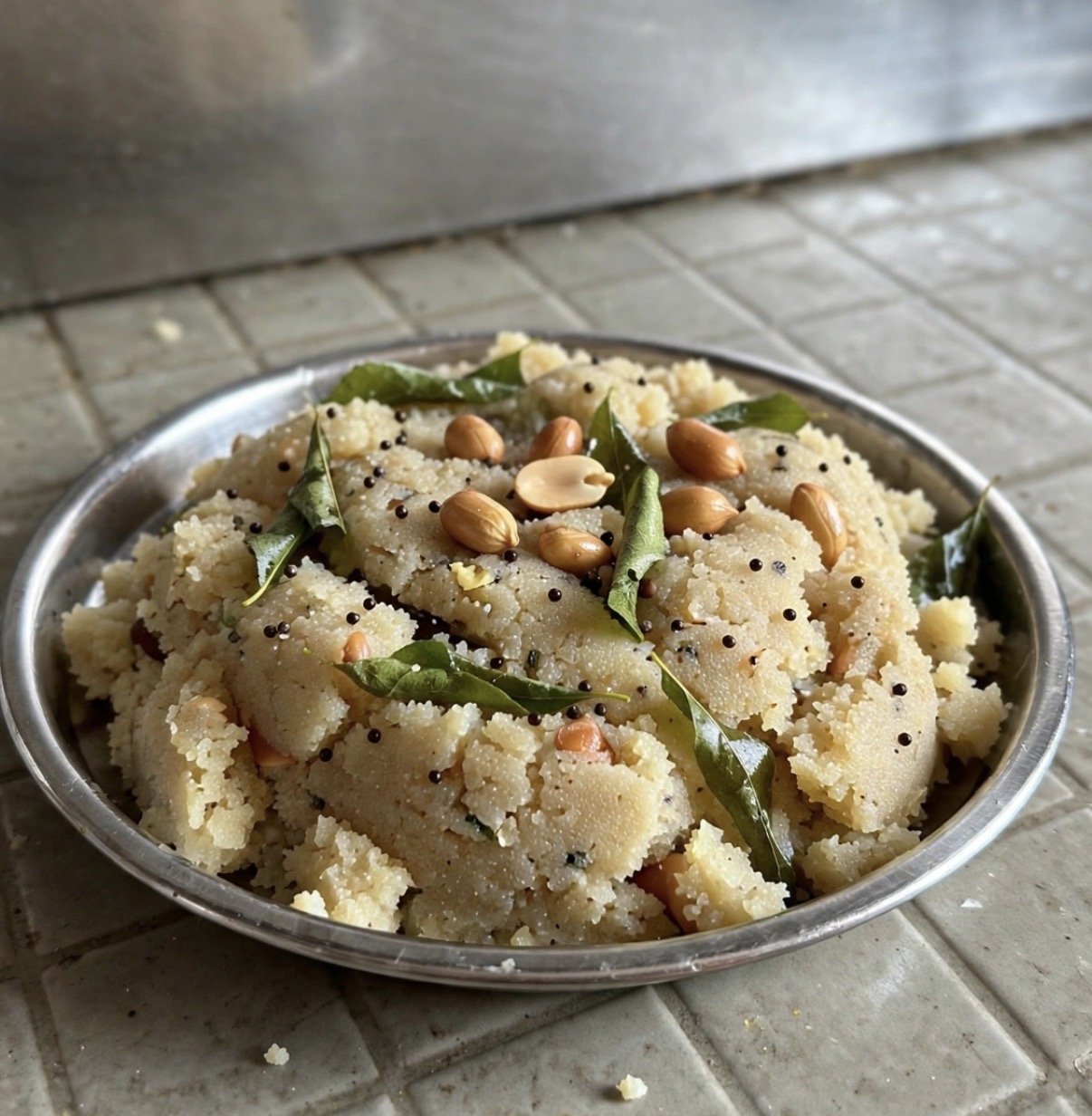
Puli Upma - Old-Fashioned Tamarind Upma | Mahalaya Paksham Day 7
Puli Upma is a wonderfully old-fashioned rice preparation with tamarind, pepper and jeera. This is completely different from the usual hotel-style rava upma. It is made with coarsely broken raw rice, not rava, and cooked in tamarind water like puliyodarai.
The result is tangy, peppery, soft and very aromatic — especially when made in sesame oil. It is one of those forgotten tiffins that deserves to come back to our kitchens.
For Mahalaya, it is made strictly without onion and garlic, only with pepper-jeera tempering.
Ingredients
For 3-4 people
• Raw rice - 1 cup
• Payatham paruppu / Split moong dal - 2 tbsp
• Tamarind - a small lemon-sized piece
• Black pepper - 1 tsp
• Jeera / Cumin - 1 tsp
• Curry leaves - few
• Hing / Asafoetida - a pinch
• Salt - as needed
• Sesame oil / Nallennai - 2-3 tbsp
• Fresh coconut - 2 tbsp, grated
• Water - as required
Method
Step 1: Prepare the rice rava
Wash raw rice and soak for about 1 hour. Drain completely and spread on a cloth for 10 minutes to remove excess water.
Grind it very coarsely in a mixer — it should look like broken rice or fine rava, not fine flour. This coarse texture is very important for Puli Upma.
Step 2: Prepare tamarind water
Soak tamarind in warm water and extract a reasonably strong tamarind water — about 2 to 2 1/2 cups. Strain and keep aside.
Step 3: Temper
Heat sesame oil in a heavy kadai. Add pepper, jeera, hing and curry leaves. Let it splutter.
Add moong dal and roast lightly for 30 seconds until aromatic. Don't let it brown too much.
Step 4: Boil
Pour in the tamarind water along with another 1/2 to 1 cup of plain water. Add salt and bring it to a good rolling boil. The water should taste slightly tangy and salty — the rice will absorb it.
Step 5: Cook the upma
Keep flame on low-medium and slowly add the coarse rice mixture in a steady stream, stirring continuously with the other hand to avoid lumps.
Keep stirring until the rice cooks and the mixture becomes a thick upma. It will take about 8-10 minutes. If it looks too thick, sprinkle a little hot water. If it looks too loose, cook for 2-3 minutes more.
Step 6: Finish
Add grated coconut towards the end, mix well and switch off. Cover and give it a few minutes to settle before serving. This resting makes it soft .
Tips
1. Coarse grind is key: Don't grind to fine flour. It should be like broken rice. Pulse the mixer 2-3 times only.
2. Tamarind: The tamarind water should be reasonably strong, not watery. Like for puliyodarai.
3. Sesame oil: Use nallennai for authentic old-style flavour. It makes a big difference in Puli Upma.
4. Stir continuously: When adding rice rava, keep stirring or it will form lumps.
Oats Dosa
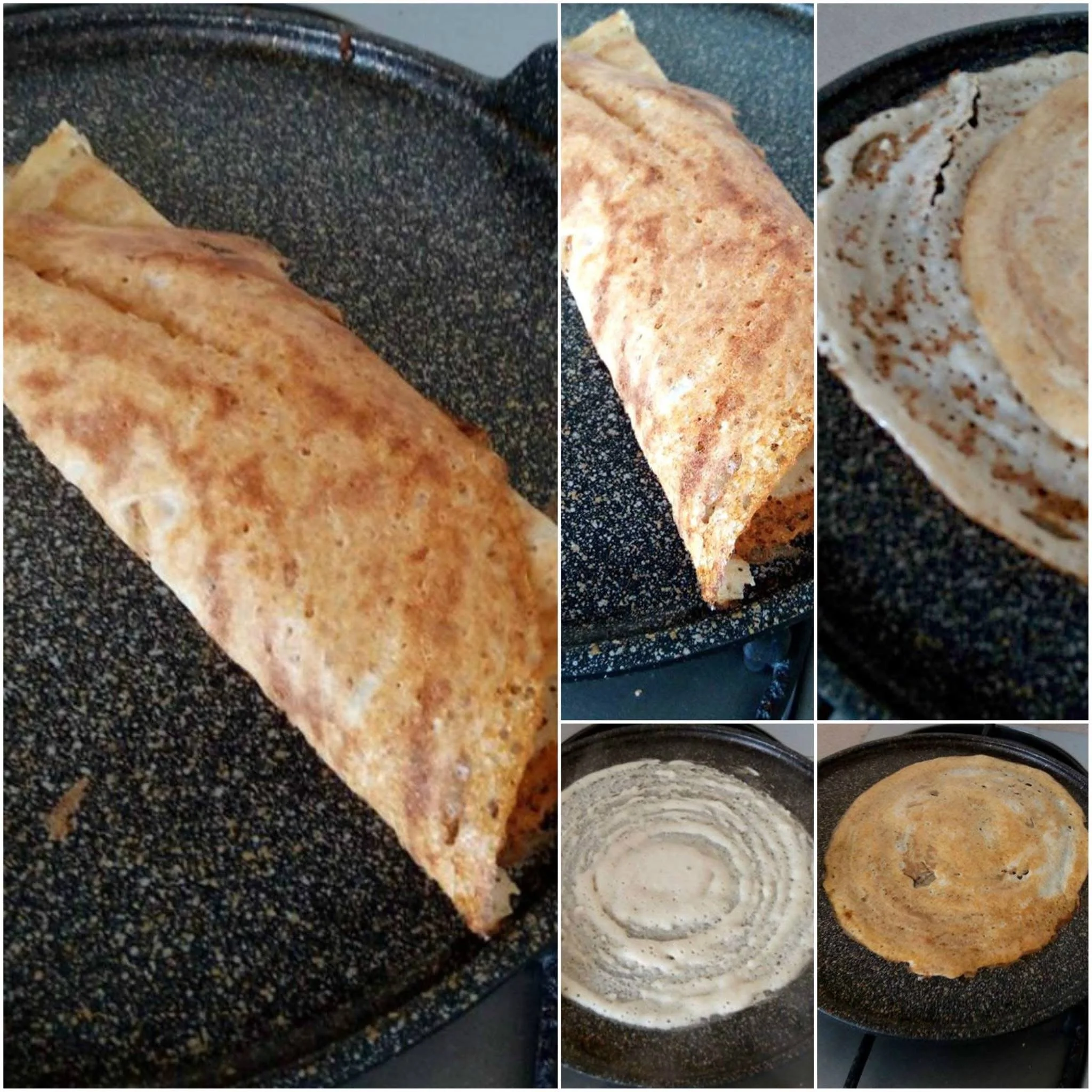
Oats Dosa - Crispy, Healthy & Protein-Packed
A wholesome twist on our regular dosa! Made with fiber-rich oats and protein-rich urad dal, this dosa comes out crisp on the outside and soft inside. You can make it instantly after resting for an hour, or ferment it for that classic dosa flavour. Perfect for a quick breakfast or light dinner.
Ingredients
• 1 1/4 cup oats - rolled oats or quick cooking oats
• 3/4 cup urad dal / black gram / ulundhu
• 4 tbsp rice flour or millet flour - ragi, jowar, foxtail millet all work well
• Salt to taste
• Water as needed to soak and grind
• Oil / sesame oil for making dosas
Instructions
1. Soak
Wash and soak urad dal for 3 hours.
Soak oats separately. If using rolled oats, soak for 1 hour in just enough water to cover. If using quick cooking oats, soak for 15 minutes just before grinding.
2. Grind
Drain urad dal completely and grind to a soft, smooth, thick and fluffy batter. Add water little by little only if needed.
Grind the soaked oats also to a smooth batter.
Mix both batters together in a large bowl to a thick idli-batter consistency. Add rice flour or millet flour and mix well without lumps.
3. Rest
Add salt and mix. Rest the batter for 1 hour.
You can make dosas right away at this stage for a quick, instant version - they turn out really good.
For best flavour and texture, allow the batter to ferment for 4-6 hours or overnight.
4. Make Dosa
Heat a dosa tawa. Pour a ladleful of batter and spread thin in circular motion. Drizzle oil around. Cook on medium flame till golden and crisp. Flip if needed.
Serve hot with coconut chutney, kaara chutney, podi or sambar.
Tips for Perfect Oats Dosa
• Batter should be thick but pourable, like regular idli/dosa batter. Don't make it watery.
• Millet flour gives a lovely nutty taste and extra fiber. Rice flour makes it extra crisp.
• If batter becomes too thick after resting, add little water.
• For extra crisp dosas, make them thin. For soft set-dosa style, keep them slightly thick.
Details
Prep time: 3 hours
Cook time: 10 mins
Total time: 3 hours 10 mins
Yield: 10 dosas
11.Barnyard Millet & Dal Idli - Power-Packed Palagaram or for breakfast.
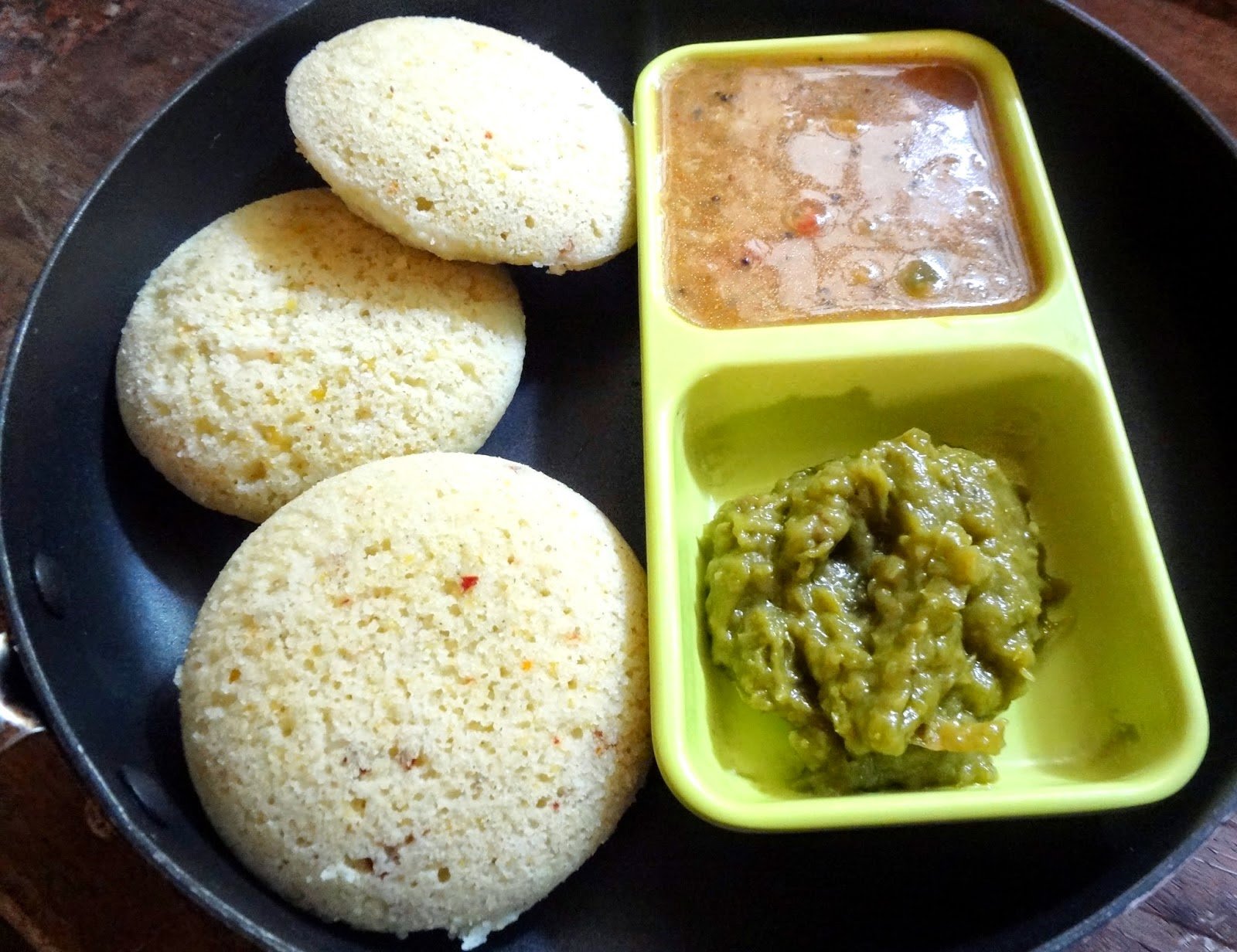
I call these Millet Idlis because millet is the main ingredient here. I have used barnyard millet for this recipe, but you can easily use regular idli rice if you like.
This is an extremely healthy way to include the best nutritious dals in your breakfast or for Mahalaya evening Palagaram and it keeps you full for a long time. Even 2 small millet and dal idlis are so filling when had with sambar or any chutney. Unlike regular idlis, these are a little heavier, but soft and beautifully grainy at the same time. A different way to enjoy the same breakfast.
Packed with fibre, protein, iron and a host of other vital minerals and vitamins, these are power-packed idlis to start your day.
Ingredients:
• 1 cup barnyard millet / kuthiraivali - or 1 cup idli rice
• 1/4 cup moong dal
• 2 tbsp urad dal / black gram / ulundhu
• 1/2 tsp asafoetida powder - optional, avoid for Mahalaya
• Few curry leaves
• Salt to taste
• Water as needed
Method:
1. Soak
Wash and soak the millets or idli rice along with moong dal and urad dal together for at least 4 hours.
2. Grind
Grind to a slightly coarse batter. The batter will be thick, so sprinkle very little water only if needed to grind. Do not make it too watery.
3. Mix
Transfer the batter to a bowl. Add salt, asafoetida powder if using, and torn curry leaves. Mix well.
4. Steam
Grease idli moulds lightly. Pour a little batter into each mould - do not fill too much as these idlis are heavier.
Steam for 10 to 12 minutes till done. Check with a toothpick, it should come out clean.
Remove and serve these soft, nutritious millet and dal idlis hot with sambar, chutney or milagai podi.
Notes:
• The batter is naturally thicker than regular idli batter. That is normal.
• For Mahalaya cooking, skip asafoetida.
• These idlis stay soft even after cooling, so they are great for lunchbox too.
12.Khatta Dhoklas :modified for Mahalaya Palagaram
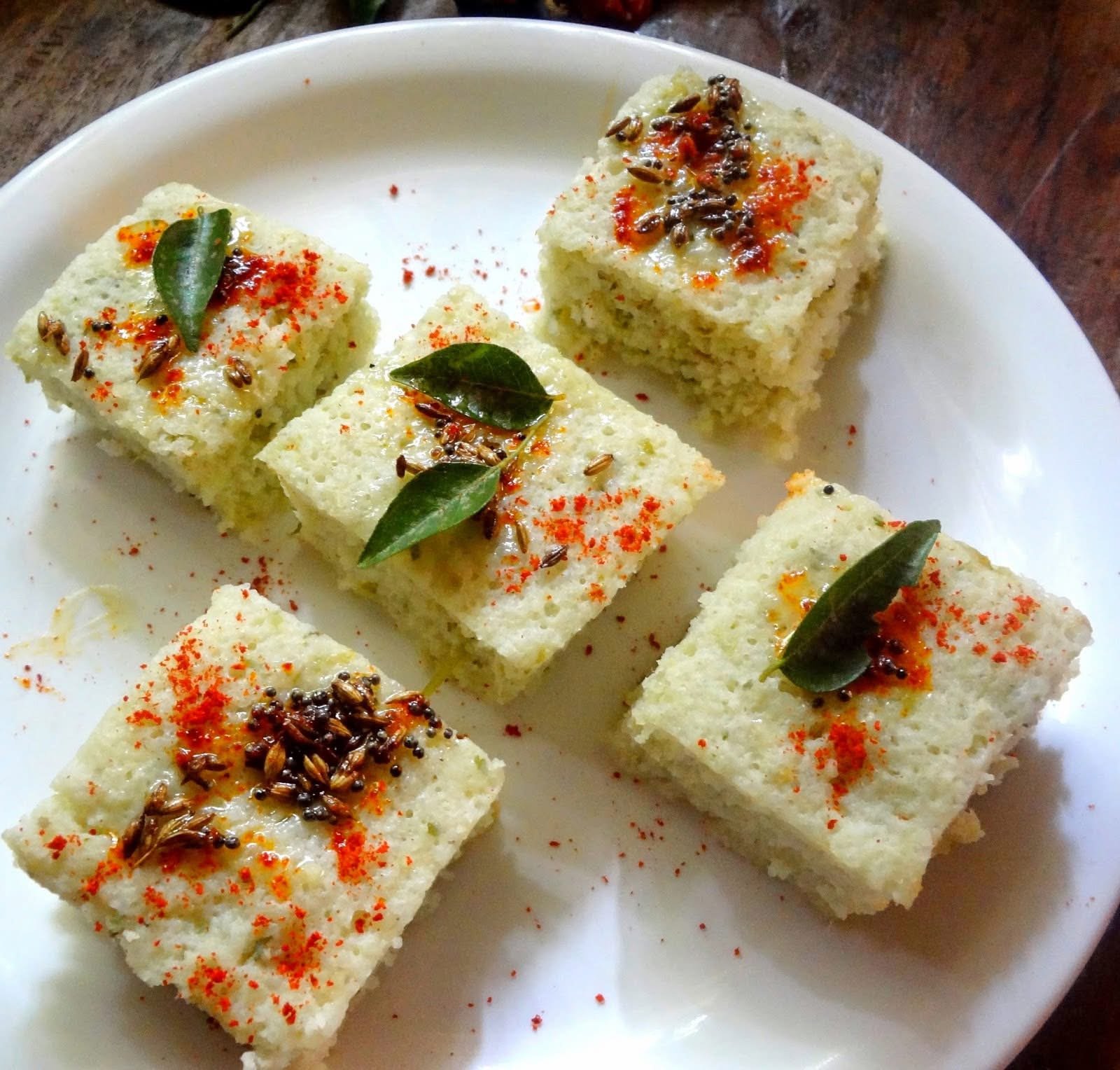
No Chili, No Asafoetida | Pepper & Ginger Version
This is my Mahalaya-friendly version of khatta dhokla. Made with our regular idli batter and sour curd, flavoured only with ginger and pepper for heat. Very light, soft and sattvic, perfect for Mahalaya days.
Ingredients:
• 2 cups thick idli / dosa batter
• Sour curd / yogurt - enough to make a dhokla batter consistency
• 1 tsp fresh grated ginger or ginger paste - without chili
• 1/2 to 3/4 tsp cracked black pepper
• Salt as required - if your idli batter already has salt, add less
For tempering:
• 1 tsp oil - peanut oil or coconut oil
• 1/2 tsp mustard seeds
• 1 tsp cumin seeds
• Few curry leaves
Method:
1. Keep steamer ready
Fill your idli steamer or cooker with water and keep it to boil well before you keep the dhokla plate inside.
2. Make batter
In a bowl, mix the thick idli batter with enough sour curd to get a dhokla batter consistency - it should be thick but pourable, not watery.
Add grated ginger, cracked pepper and salt if needed. Mix gently.
3. Steam
Grease a steel plate or round cake tin with little oil. Pour the batter into it.
Steam for 10 to 12 minutes till the dhokla is done and firm. A toothpick inserted should come out clean.
4. Cool and cut
Remove from steamer and cool completely. Ease out and cut into squares.
5. Temper
Heat oil, crackle mustard seeds, add cumin seeds and let them brown slightly, add curry leaves.
Pour this tempering over the cut dhoklas.
Serve warm with coconut chutney or any Mahalaya-friendly chutney of your choice.
Mini Varagu Millet Idli
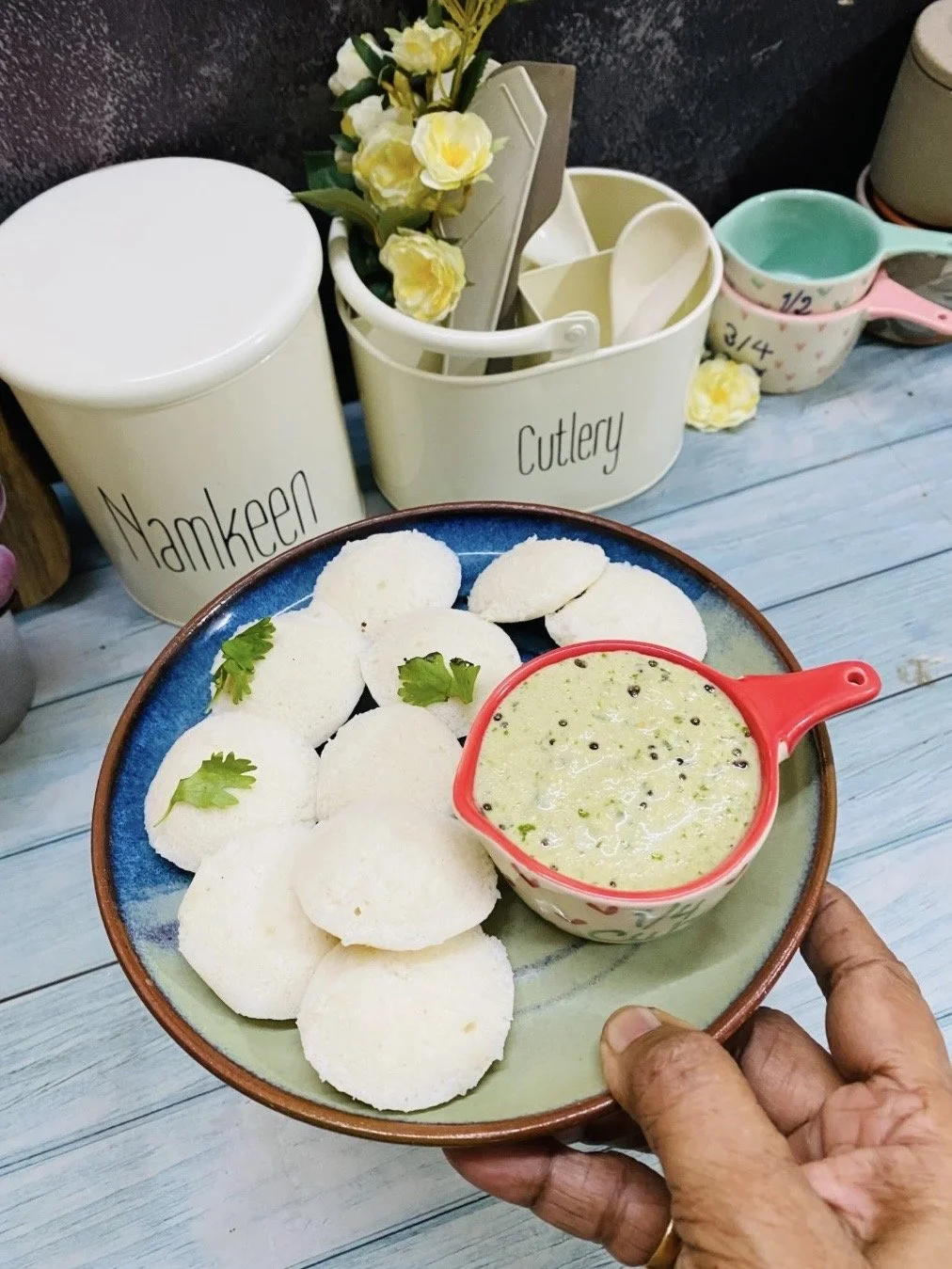
Mahalaya Palagaram
These mini millet idlis are so soft and fluffy, perfect for Mahalaya Palagaram. I make them with varagu / kodo millet, urad dal and a little poha for softness. No rice needed.
Ingredients:
• 2.5 cups varagu / kodo millet
• 1 cup urad dal / ulundhu / black gram
• 1/4 cup thick or medium poha / aval
• Salt to taste
• Water as needed for soaking and grinding
Method:
1. Soak
Wash varagu millet well. Wash urad dal well. Soak both together or separately for 4 hours.
Wash poha well and soak it 30 minutes before grinding.
2. Grind
Grind everything together in a mixie or wet grinder with very little water to a smooth, fluffy batter. Do not add too much water.
I always grind in mixie as I make small batches, and it works very well for this.
3. Ferment
Ferment the batter overnight without adding salt.
4. Steam
After fermentation, add salt and mix gently.
Grease mini idli moulds and pour batter. Steam for 10 to 12 minutes till done.
Serve soft mini millet idlis with sambar, coconut chutney or milagai podi.
Notes:
• I did not add methi / fenugreek seeds for this batch. It is optional.
• Poha helps to make the idlis extra soft even with millets.
• Fermenting without salt gives a better rise, especially for millet batters.
Little Millet Adai / Dosa adapted for Mahalaya Palagaram
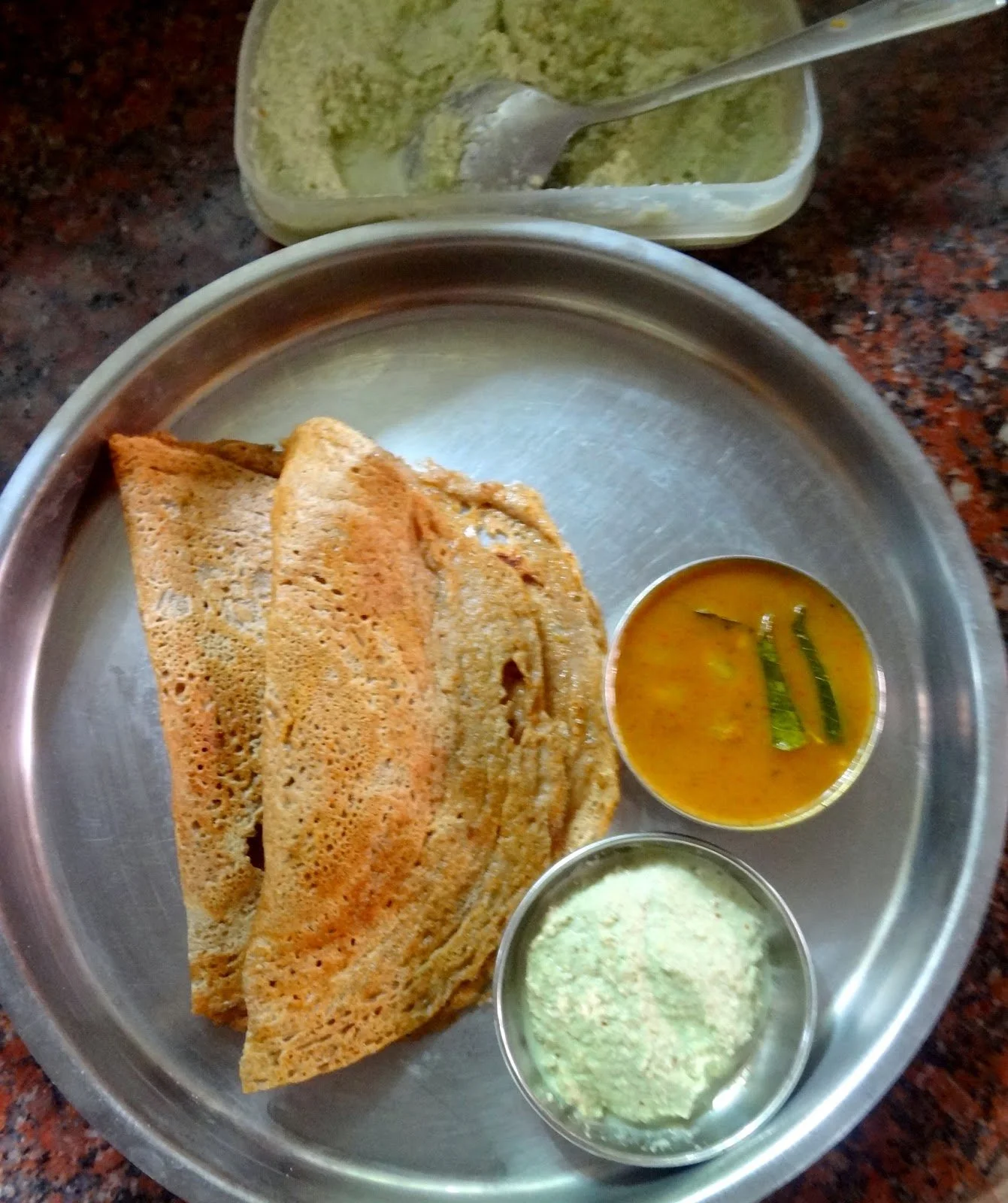
Mahalaya Palagaram - Samai Millet Adai
Little Millet Adai with Udad & Moong Dal Only
This is my Mahalaya Palagaram version of samai adai. No chana dal, only urad dal and moong dal. Crisp on the edges, soft inside and very filling.
Ingredients:
• 1 cup little millet / samai
• 1/2 cup urad dal / black gram / ulundhu
• 1/4 cup moong dal / yellow split gram
• 1/2 tsp black pepper corns
• Salt to taste
• Few curry leaves
• 2 tbsp rice flour - to be used only if needed
• Sesame oil / gingelly oil for making adai
For strict Mahalaya: I have removed asafoetida and red chilies here and used only pepper for heat. On regular days you can add 2-3 dry red chilies while grinding.
Method:
1. Soak
Wash samai millet, urad dal and moong dal well together. Soak for 3 to 4 hours.
2. Grind
Drain water completely. Grind to a coarse batter with black pepper corns, salt and curry leaves.
The batter should be like idli batter - not too smooth, little coarse is ideal for adai.
Transfer to a bowl and keep aside. If the batter feels too soft or watery, add 2 tbsp rice flour and mix to adjust.
3. Make Adai
Heat a dosa griddle, grease and wipe well.
Pour a ladleful of batter and spread into a circle like dosa, but slightly thicker. Make the edges thin for a crisp finish.
Add few drops of sesame oil around the edges. Cook on medium flame till golden and crisp. Flip and cook the other side.
Serve:
Serve hot with sambar, coconut chutney, molagai podi and jaggery.
Why millets?
Millets are totally nutrition packed and a powerhouse of minerals and vitamins. Gluten free and highly nutritious, they are ideal for all age groups including children.
They give immense energy to athletes, ideal for those with celiac issues and sensitive digestion. They are a complete protein source with around 15% protein, rich in iron, magnesium, copper, essential amino acids and B-complex vitamins including niacin, folacin, thiamin and riboflavin. Millets are rich in phytic acid which is believed to help lower cholesterol and triglycerides, help with blood sugar control and are believed to help reduce diabetes and cancer risks.
15.Little millets sponge dosa | Samai sponge dosa
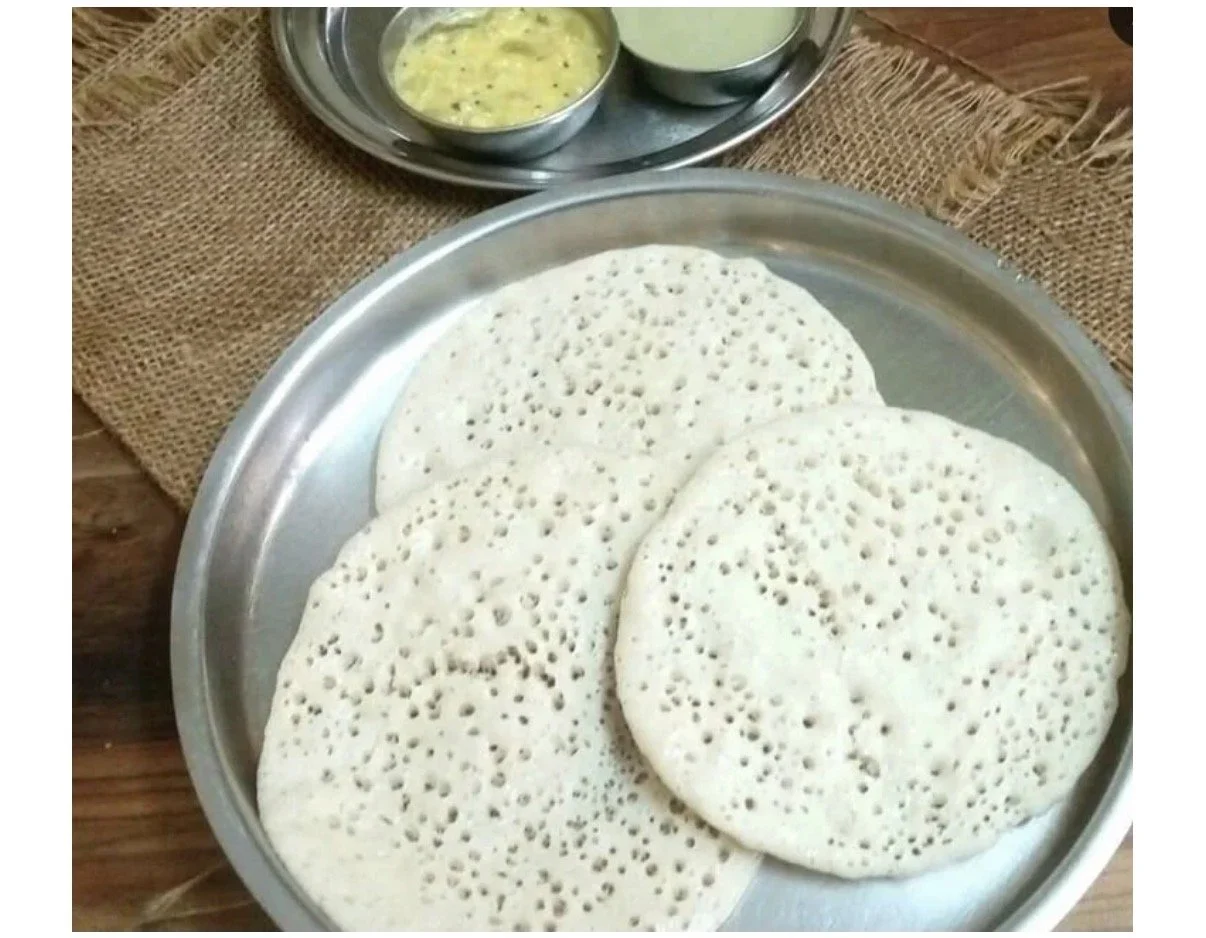
Mahalaya Palagaram - Little Millet Sponge Dosa
Samai Sponge Dosa | Soft, Porous & Fermented
Super soft, spongy dosas made with little millet. The batter is naturally fermented and stays porous even without spreading too thin. Perfect for Mahalaya Palagaram.
Ingredients:
• 2 cups little millet / samai
• 1 cup urad dal / black gram / ulundhu
• 1/2 cup poha / aval - thick or medium
• 1/2 tsp methi seeds / fenugreek - optional, skip if you prefer for Mahalaya
• Water as needed
• Salt to taste - add after fermentation
• Oil for making dosa
For thin paper dosa variation: 2 tbsp rice flour
Method:
1. Soak
Wash little millet well, 3-4 times till you get clear water. It is recommended to wash millets well and soak for longer hours to get maximum nutrition. You can pre-soak washed millets overnight.
Wash urad dal and soak together with millets for 8 to 10 hours. Other ingredients can be soaked for lesser time if you are soaking separately.
Wash poha and soak for 15 minutes before grinding.
2. Grind
Grind everything together including poha in a mixie to a smooth, thick batter. Add very little water while grinding.
3. Ferment
Allow to ferment overnight or for 8 hours. Do not add salt before fermenting.
4. Make Sponge Dosa
After fermentation, add salt and mix gently.
Heat a dosa pan and grease lightly. Pour a small ladleful of batter without spreading much. It will become porous on its own. Cover with a lid and cook on medium flame for a moist, spongy dosa. Add oil around the edges.
Don't flip if you want a nice spongy top.
Serve hot with chutney, sagu or sambar.
For Paper Dosa from same batter:
Add 2 tbsp rice flour to a portion of the same batter, mix well and spread thin like regular dosa. You will get good crisp paper dosas too.
Kancheepuram idli with millets
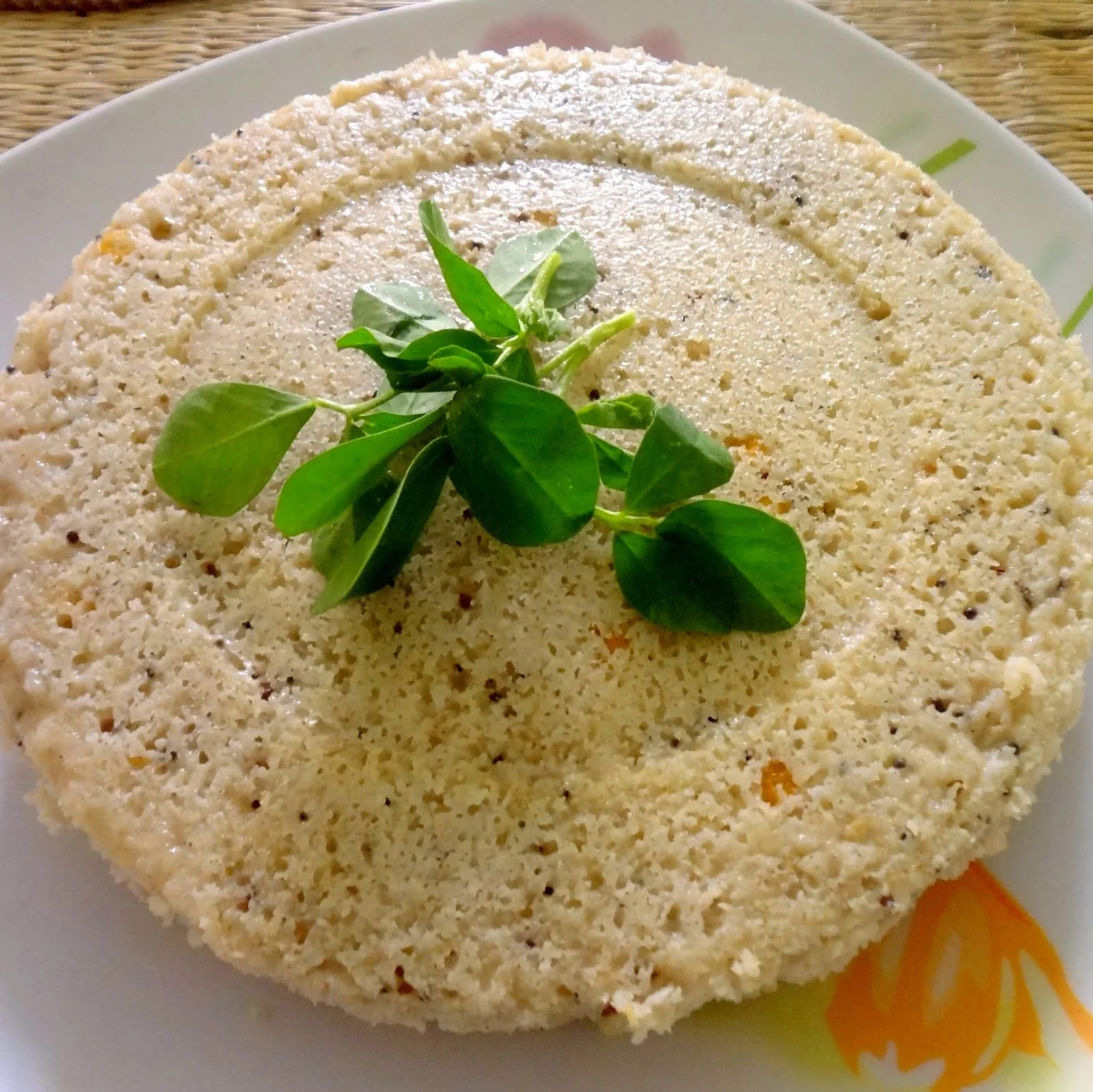
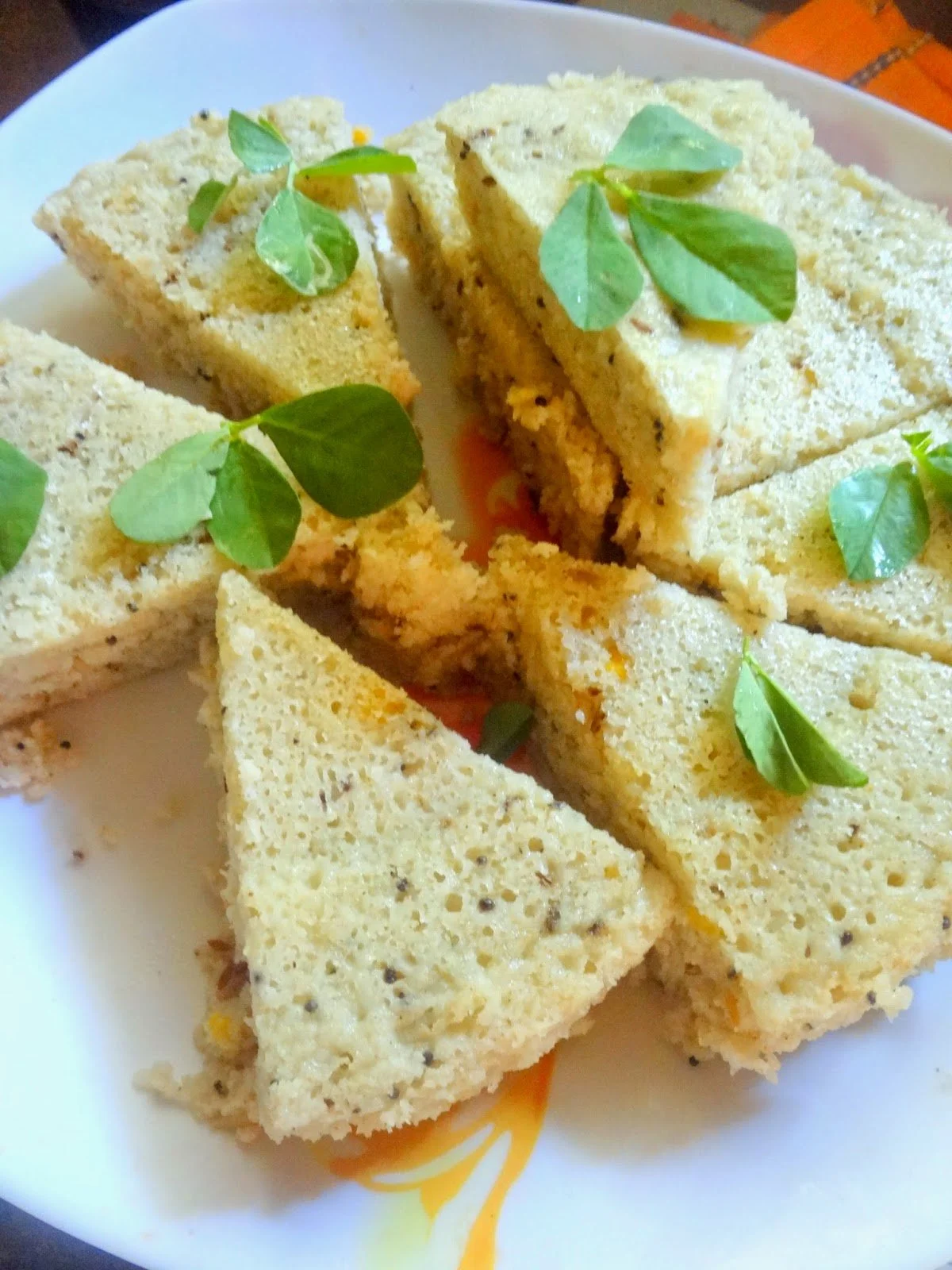
Mahalaya Palagaram - Kanchipuram Idli
Temple Style Idli | Millet & Rice Version | No Green Chili
Kanchipuram idli is another great way of having regular idli but with a spicy flavour added to the batter. Normal white soft idlis are bland and need accompaniments, whereas Kanchipuram idlis are dense, full and heavy, flavoured liberally with cumin, pepper, ginger and dry ginger powder. Some toasted cashew nuts are added for crunch.
These idlis got their name from the temple town of Kanchipuram where it is offered as prasad / naivedyam to the Lord.
Every once in a while we make this for a different kind of breakfast or tiffin. The batter is thicker and more coarse than regular idli batter, also steamed in plates, steel cups or pressure cooker separators to make one big cake and then cut into portions.
While these idlis are normally made with rice and urad dal, I used millets to make it healthier. This is a great way to avoid white grain. I am sharing both methods, follow whichever suits you. If millets are not readily available, you can switch to the usual rice-urad dal recipe. But do try the millet based, you will not see any difference in taste.
All pics are millet based Kanchipuram idlis.
Option 1: Millet Based Kanchipuram Idli - for Mahalaya Palagaram
• 2 cups kodo millet / kodra / varagu arisi
• 1 cup urad dal / ulundhu
• You can also try with other millet varieties. Rest of the recipe remains same.
Option 2: Regular Rice & Urad Dal Combination
• 1 cup parboiled rice
• 1 cup raw rice
• 1 cup urad dal
• 1/2 tsp fenugreek seeds / methi - optional, skip if you prefer for Mahalaya
• Salt to taste
For Flavouring & Tempering - Mahalaya Adapted
• 1 tbsp ghee or sesame oil / gingelly oil
• 1 tsp mustard seeds
• 1 tbsp chana dal - soaked separately for 1 hour, not to be ground with batter
• 1 tsp split urad dal
• 1 tbsp cashew nuts split
• 2 tsp cumin seeds
• 1 to 1.5 tsp cracked black pepper - increased to compensate for no green chili
• 1 tsp dry ginger powder / sukku powder
• 1 tsp grated fresh ginger
• 3/4 cup thick sour curds / yogurt
Adapted for Mahalaya: Green chilies removed. Heat comes only from pepper, fresh ginger and dry ginger powder.
Method:
1. Soak
Soak dal and rice / millets separately just as we do for idli dosa batter. Let it remain soaked for 4 hours.
2. Grind
Grind urad dal and fenugreek seeds separately to a thick foamy batter. Grind rice / millets separately to a coarse batter. Mix both batters well. Do not add too much water, we need a thick, coarse, grainy batter. We will add sour curds later. Leave to ferment overnight or for 8 hours.
3. Temper
After fermentation, heat ghee or sesame oil. Add mustard seeds, let it crackle. Add soaked chana dal, split urad dal and cashew nuts, roast till golden. Add cumin seeds, cracked pepper, grated ginger and dry ginger powder. Saute for few seconds.
4. Mix
Add this tempering to the fermented batter. Add thick sour curds and salt. Mix well and gently.
5. Steam
Grease idli plates, dhokla plates, steel cups or steel tumblers. Pour batter. The batter is thick, so steam for at least 15 minutes as it takes a while to cook.
Cut into pieces if steamed as a cake and serve hot with coconut chutney and sambar.
Notes:
Adding sour curds is optional as the batter will ferment naturally, but adding it will give a nice sour taste like khatta dhokla, so it is your choice.
17.Mahalaya Palagaram - Little Millets Upma Kozhukattai
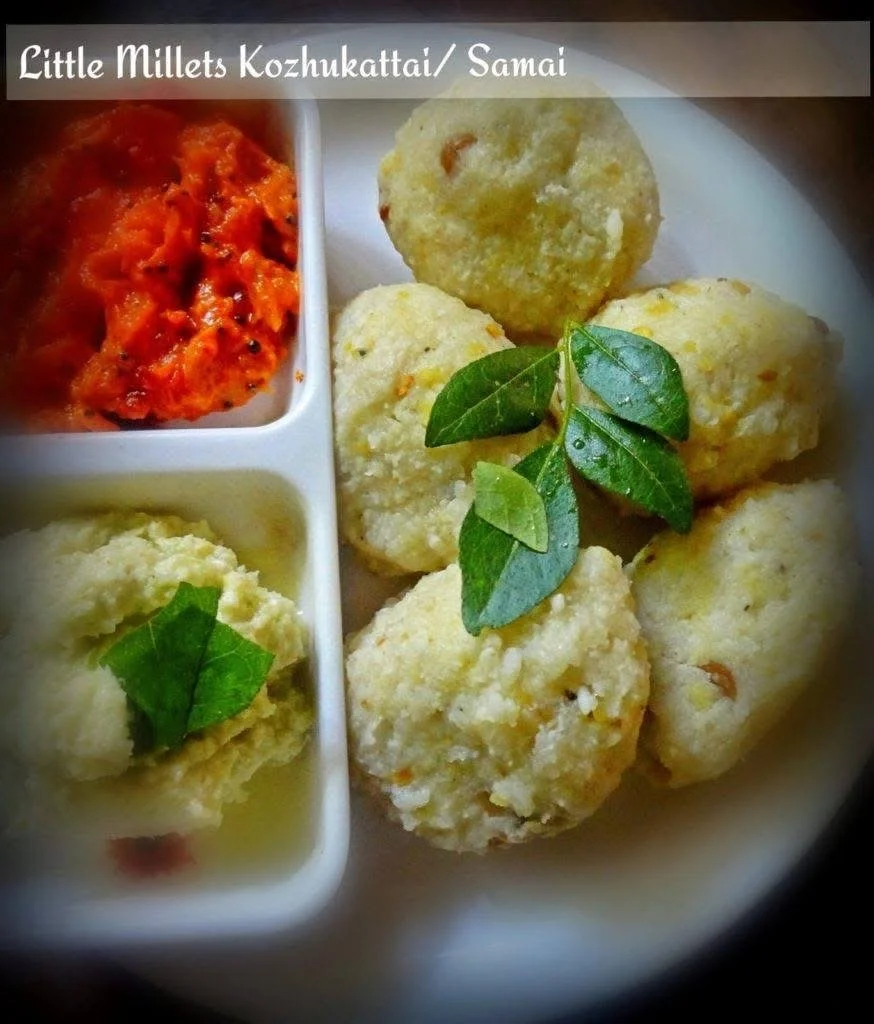
Mahalaya Palagaram - Little Millets Upma Kozhukattai
Samai Kozhukattai
Soft upma made and then shaped into dumplings and steamed again - very light and filling for Mahalaya.
Ingredients:
• 1 cup little millet / samai
• 2 tbsp moong dal / yellow split gram - use only moong dal for Mahalaya, skip chana dal
• 1 tsp cumin seeds / jeera
• 1 tsp cracked black pepper
• Salt to taste
• 2 tbsp grated fresh coconut - optional
• 2 cups water
To temper:
• 2 tsp oil - sesame oil or coconut oil
• 1/2 tsp mustard seeds
• 1 tsp split urad dal / ulundhu
• Few curry leaves
Adapted for Mahalaya: No asafoetida and no red chilies. Heat comes only from cracked pepper and cumin.
Method:
1. Cook the upma mixture
Take a pressure cooker or a pan, add oil and let it heat up.
Add split urad dal, mustard seeds, cumin seeds and curry leaves. When mustard pops and dal turns golden, add 2 cups water and let it come to a good boil.
Add the washed little millet, moong dal, cracked pepper, salt and grated coconut if using. Mix well.
If using cooker - close with lid, put weight and allow 2 whistles. Let pressure cool down completely.
If using open pan - cook like upma till millets and moong dal are soft and water is absorbed, stirring in between.
2. Shape
Take out the cooked millet mixture and allow to cool a bit till you can handle.
Grease your palms lightly and make small oval or round balls, do not press too hard. Place on greased idli plates or steamer plates.
3. Steam
Keep steamer with water to boil. Place the plate with prepared kozhukattai and steam for 12 minutes or till done well.
Remove when slightly cooled and keep in a covered vessel till serving so they stay soft.
Serve warm with coconut chutney or sambar.
Note: The kozhukattai mixture can be prepared in an open pan also like upma. Cooker is faster.
Arisi Upma
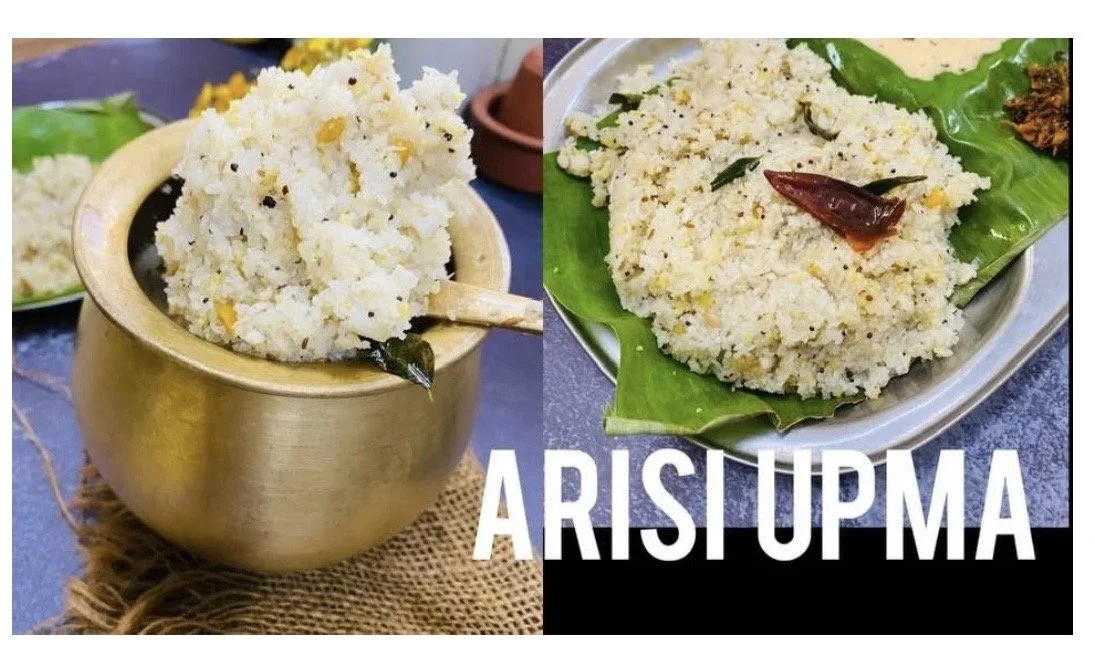
Mahalaya Palagaram - Arisi Upma
Soft, moist and fluffy rice upma made with raw rice and toor dal. Made with coconut oil and pepper for a sattvic Mahalaya tiffin.
Ingredients:
• 1 cup raw rice / pacharisi ( swap with moong dal for Mahalaya)
• 1/4 cup toor dal - or less, I like little more dal in upma so I used 1/4 cup
• 1 tsp black pepper - add more for spicier upma
• 1 tsp cumin seeds / jeera
• 2 1/2 cups water - may need up to 3 cups depending on rice quality
• 2 tbsp coconut oil - generous amount gives super soft moist upma
• Salt to taste
• 1/4 cup grated fresh coconut
For tempering:
• 2 to 3 tbsp coconut oil
• 1 tsp mustard seeds
• 1 tsp urad dal / ulundhu
• 1 tsp chana dal / Bengal gram - skip for strict Mahalaya and use only urad dal, or replace with moong dal
• Few curry leaves
Adapted for Mahalaya: No green chilies and no red chilies. Heat comes only from pepper and cumin.
Method:
1. Prepare rice-dal powder
Wash and drain raw rice and toor dal well. Spread on a clean cotton cloth to air dry for about 2 hours.
Grind to a coarse rava-like powder. If you want fluffy upma, sieve the powder and use the fine rava part. If you prefer slightly mushy soft upma, don't sieve.
2. Temper
Heat coconut oil in a heavy pan. Add mustard seeds, let it crackle. Add urad dal, chana dal, cumin seeds and curry leaves. Fry till dals turn light golden.
3. Cook upma
Add 2 1/2 cups water and required salt, let it come to a rolling boil. Add 1 tsp cracked pepper.
Lower flame and add the ground rice-dal powder slowly in a steady stream, stirring continuously to avoid lumps.
Add grated coconut and 2 tbsp coconut oil. Mix well, cover and cook on low flame for 5 to 7 minutes till water is absorbed and upma is soft and moist.
If the rice quality needs more water, add extra 1/2 cup hot water. Sometimes for 1 cup rice-dal mixture we may need up to 3 cups water also. I needed just 2 1/2 cups.
Fluff gently and serve hot with coconut chutney, sambar or just with jaggery and ghee.
Jowar Paratha
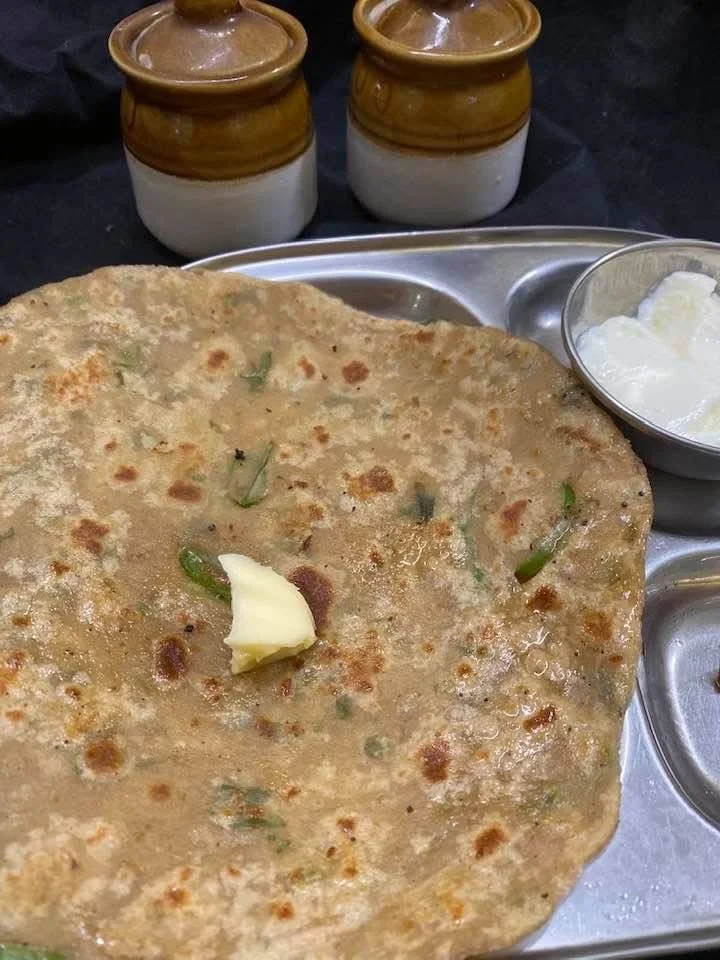
Mahalaya Palagaram - Jowar Paratha with sweet potatoes
Soft Sorghum Paratha | No Onion No Garlic
Jowar is naturally sattvic and very light for Mahalaya. This version stays soft because we knead with hot water and a little coconut oil / ghee.
Ingredients:
• 1 cup jowar flour / sorghum flour / jola flour
•. 1 or two cooked sweet potatoes
• 2 tbsp raw rice flour - for binding, do not use parboiled rice flour
• 1/4 cup grated fresh coconut - optional but keeps it soft
• 1 tsp cumin seeds / jeera
• 1 tsp cracked black pepper
• 1 tsp grated fresh ginger
• 1/4 tsp dry ginger powder / sukku powder - optional
• Few curry leaves finely chopped
• 1 tsp white sesame seeds / til - optional
• Salt to taste
• 1 tsp coconut oil or ghee for dough
• Hot water as needed - about 3/4 cup
• Ghee or coconut oil for roasting
Mahalaya adapted: No green chilies, no red chilies, no asafoetida. Heat comes only from pepper and ginger.
Method:
1. Make dough
Boil 3/4 cup water with salt and 1 tsp oil.
In a bowl take jowar flour, raw rice flour, cumin, mashed sweet potatoes , cracked pepper, grated ginger, dry ginger powder, chopped curry leaves, sesame seeds and grated coconut. Mix.
Pour hot water little by little and mix with a spoon. When it is warm enough to handle, knead to a soft smooth dough. Add a few drops of ghee and knead again. Cover and rest for 10 minutes.
2. Roll
Jowar has no gluten so it will crack if you roll like wheat. Take a small ball, keep it between two greased butter papers or zip covers and gently press with your fingers or roll very lightly to a medium thick paratha. If edges crack, join with wet fingers.
3. Roast
Heat a tawa on medium flame. Place paratha, cook on one side till small bubbles appear. Flip, apply little ghee or coconut oil and press gently. Cook both sides till golden spots appear and paratha puffs slightly.
Do not cook on very high flame or it will become hard.
4. Serve
Keep in a hot box covered with cloth so it stays soft. Serve hot with coconut chutney, curd or sambar.
Tips for soft Mahalaya Jowar Paratha:
• Always use hot water to knead, not cold.
• Adding little raw rice flour and grated coconut prevents it from becoming too dry.
• If dough feels dry, wet your palm and knead again, don't add more dry flour.
• For extra softness you can add 2 tbsp cooked moong dal water / pasiparuppu thanni to the dough instead of plain water.
21. Mahalaya Palagaram - Samo Dosa with Sweet Potato
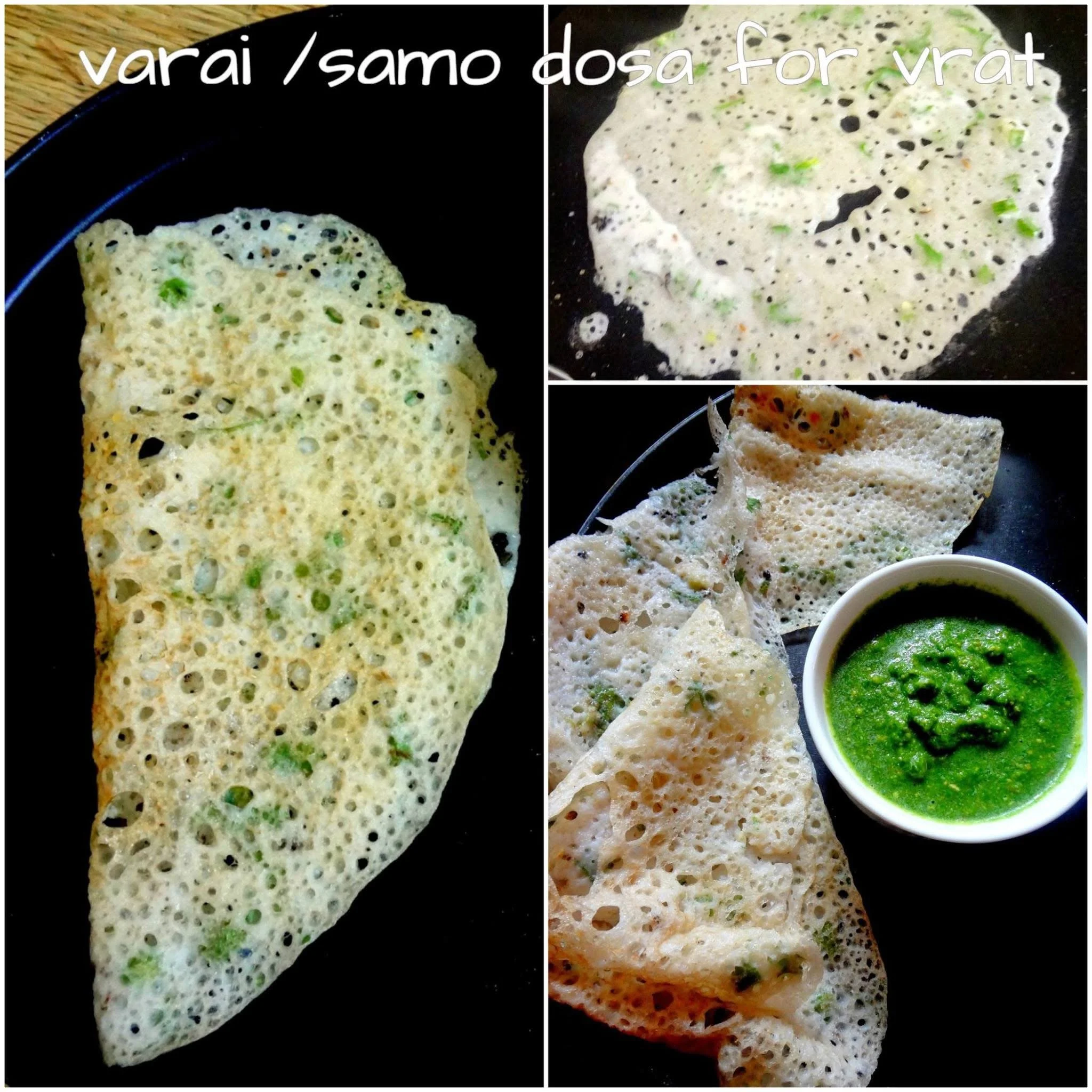
Barnyard Millet Dosa / Kuthiraivali Dosa / Vrat Style | No Onion No Garlic
Another delightful dosa that you can savor during Mahalaya. You will be surprised how closely it resembles Rava dosa or Neer dosa. What makes it even better is its easy recipe, and adding grated sweet potato while grinding gives a delightful softness and light sweet taste. Perfect with coconut chutney.
Ingredients:
• 1 cup samo / barnyard millet / moraiyo / varai / kuthiraivali
• 1 medium sweet potato - peeled, about 1/2 cup. You can use grated raw sweet potato or cooked and mashed sweet potato. We use sweet potato instead of regular potato for Mahalaya
• Rock salt / sendha namak or regular salt to taste
• 1 tsp cumin seeds / jeera
• 1 tsp cracked black pepper - instead of green chillies for Mahalaya
• 1 tsp grated fresh ginger - optional
• Few chopped coriander leaves
• Oil or ghee to roast dosas - sesame oil, coconut oil or ghee
Adapted for Mahalaya: No green chilies. Heat comes only from pepper and ginger. Regular potato replaced with sweet potato.
Method:
1. Soak
Wash the samo / kuthiraivali millets well and soak in clean water for 3 hours.
2. Grind
Drain water and grind the millets to a smooth paste in a blender, adding the grated raw sweet potato OR cooked mashed sweet potato to it. If using raw grated, grind together. If using cooked mashed, add after grinding and mix well.
Adjust consistency by adding water until it resembles thin Rava dosa or Neer dosa batter - very watery and flowing.
Add salt, cumin seeds, cracked pepper, grated ginger and chopped coriander leaves. Mix thoroughly.
3. Rest
Allow the batter to rest for 15 minutes for best dosas, though you can make immediately also. Stir well before making each dosa, as millet settles down.
4. Make dosa
Heat a tawa / griddle, grease well and wipe off excess. The tawa should be hot.
Take a ladle of thin batter and pour from the outer rim towards center, quickly filling gaps to make a round lacey dosa like Rava dosa. Do not spread with ladle.
Add few drops of ghee or oil around edges and cook on medium flame till crisp and golden. No need to flip if batter is very thin, but you can flip for a softer version.
Serve hot with coconut chutney or peanut curd chutney - made without green chilies for Mahalaya.
Note: Sweet potato gives more softness and a slight sweet balance to pepper than regular potato. If batter becomes too thick, add little more water. For crispier dosa, use raw grated sweet potato. For softer dosa, use cooked mashed sweet potato.
22.Foxtail millet dosa , two ways .
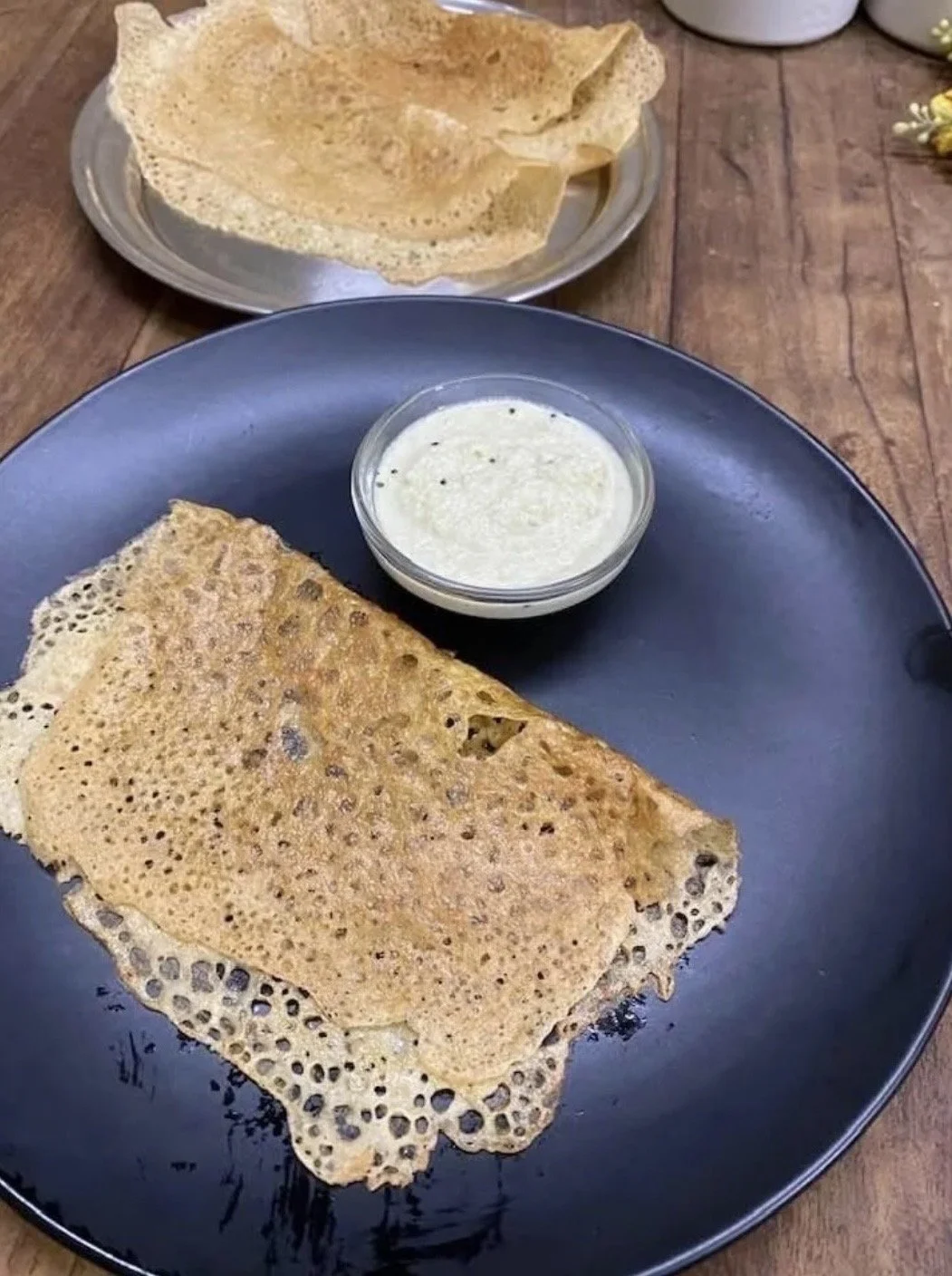
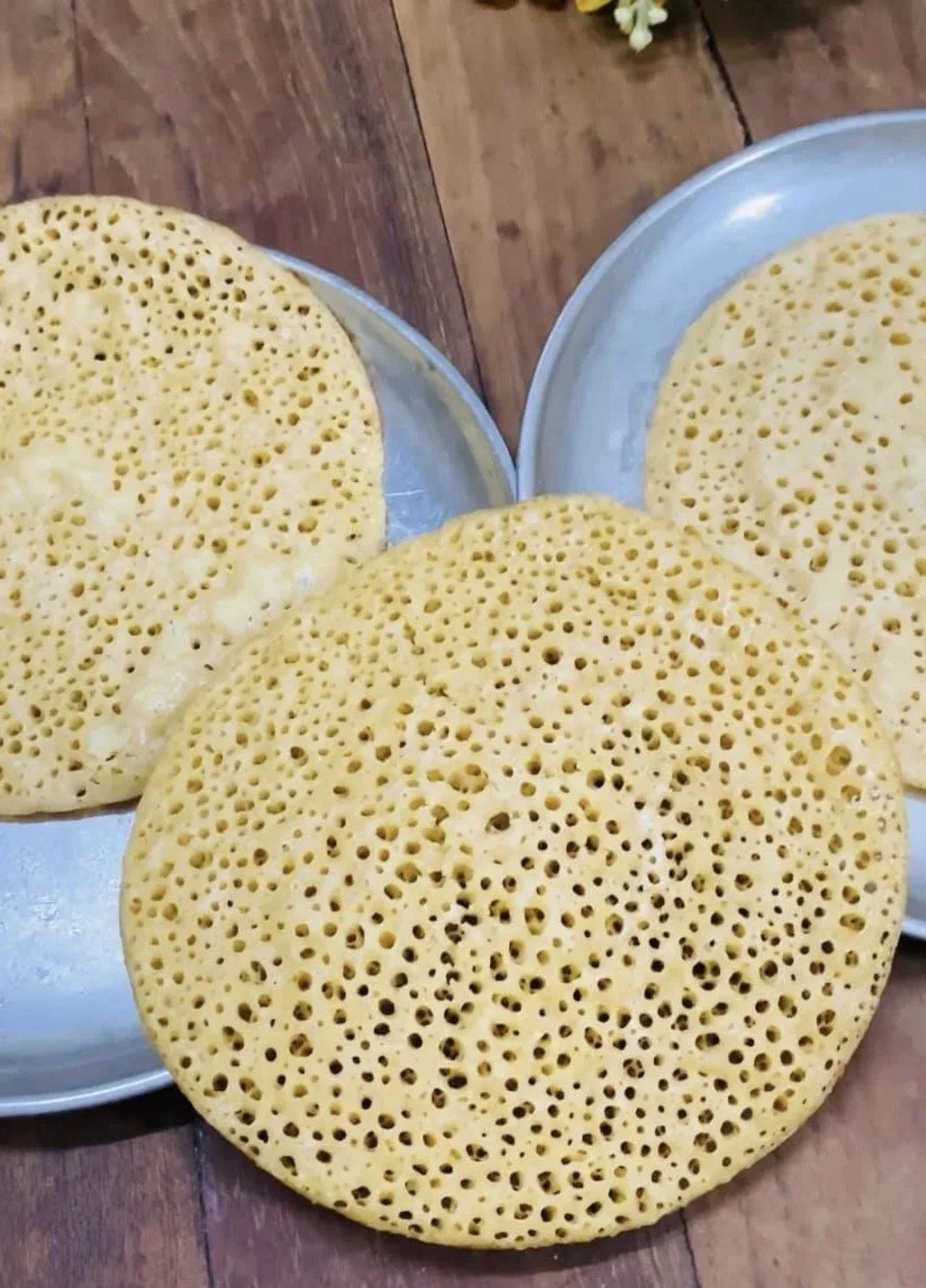
Delicious Thinai Dosa / Foxtail Millet Dosa
With just one main ingredient, you can make two delightful types of dosa:
A crispy, rava dosa-style thin dosa without fermentation.
A soft, spongy set dosa after fermentation.
Rava Dosa Style:
Wash and soak thinai (foxtail millet) in clean water for 6 hours or overnight.
Grind it into a smooth paste, add salt, and dilute the batter to the desired consistency.
Make thin, crispy dosas immediately.
Set Dosa Style:
Take the same batter and add 2–3 tablespoons of home made urad dal (udad dal) flour.
Mix well and let it ferment overnight.
Prepare soft, fluffy set dosas the next day.
Tips:
For convenience, you can divide the batter: use half for instant rava dosa and ferment the rest for set dosa.
A dosa recipe doesn’t get easier than this!
Ingredients
2 cups thinai /foxtail millets washed many times till water runs clear,
soak for 6 hours or longer, allow to soak for longer hours to get maximum benefits from millets .
grind to a smooth batter .
add salt mix well, dilute to thin consistency if making rava dosa type.
To the same batter, before diluting, add 2-3 tbsp udad dal flour, mix well, allow to ferment for next day to enjoy as sponge dosas .
Kodo millet Pongal ( Varagu )
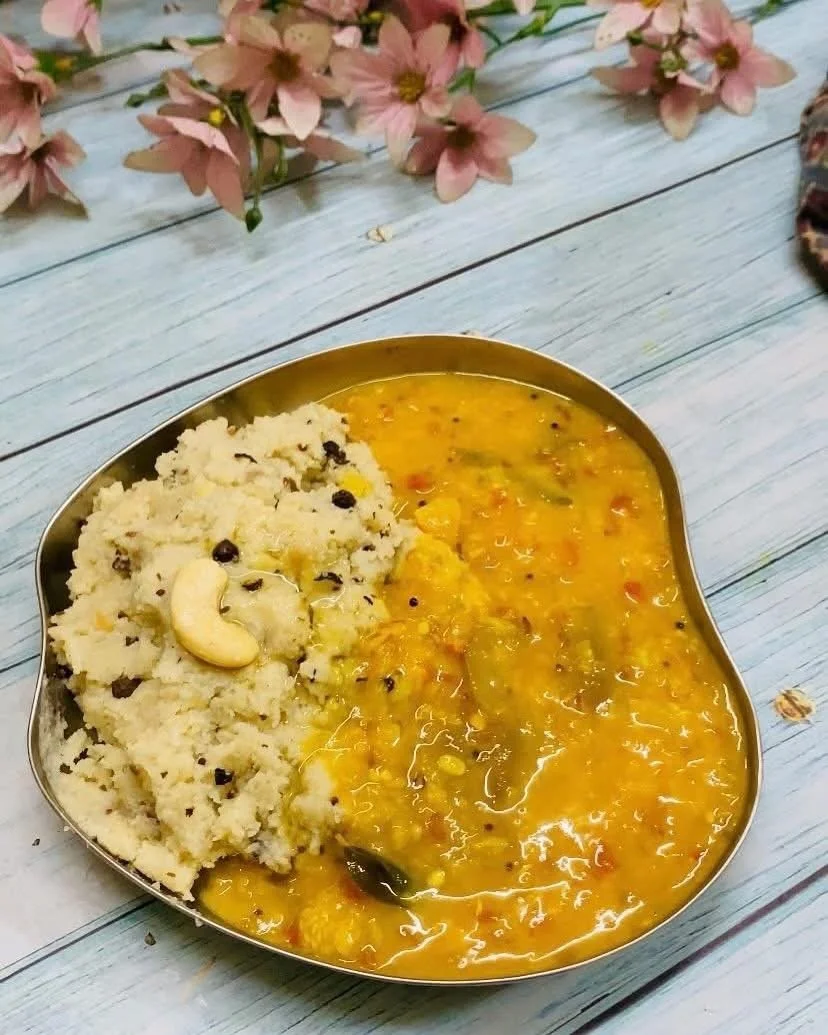
Mahalaya Palagaram - Kodo Millet Ven Pongal
Varagu Arisi Ven Pongal |
Soft, ghee aroma filled and peppery Pongal made fully with varagu arisi instead of rice - very light and ideal for Mahalaya tiffin.
Ingredients:
• 1 cup kodo millet / varagu arisi / varak
• 1/4 cup moong dal / yellow split gram / pasiparuppu
• 3 1/2 cups water - for soft Pongal, if you like more mushy add 4 cups
• Salt to taste
• 1/4 cup grated fresh coconut - optional but gives softness
To temper:
• 3 tbsp ghee - generous ghee is needed for Pongal, you can mix with 1 tbsp coconut oil
• 1 tsp cumin seeds / jeera
• 1 1/2 tsp whole black pepper / cracked pepper - add more if you like spicier
• 1 tbsp grated fresh ginger
• Few curry leaves
• 10 to 12 cashew nuts
• 1 tsp split urad dal - for extra flavor, optional
Adapted for Mahalaya: No green chilies, no red chilies, no asafoetida. Heat comes only from pepper and ginger.
Method:
1. Wash
Wash varagu arisi and moong dal together 2-3 times till water runs clear. No need to soak for long, but you can soak for 15 minutes if you have time. Drain.
2. Cook Pongal
In a pressure cooker, add little ghee and lightly roast moong dal for a minute till you get a nice aroma. Do not brown.
Add washed varagu + moong dal, 3 1/2 cups water, salt and grated coconut if using. Mix.
Pressure cook for 4 to 5 whistles on medium flame. Varagu takes a little longer than rice to become soft. Let pressure cool completely.
Open and mash gently with ladle. If too thick, add 1/2 cup hot water to adjust to soft Pongal consistency.
3. Temper
Heat remaining ghee in a small pan. Add cumin seeds, when it crackles add whole pepper, split urad dal and cashew nuts. Fry till dal and cashews turn golden.
Add grated ginger and curry leaves, fry for few seconds and pour this tempering over the cooked Pongal. Mix well.
Add 1 more tsp ghee on top before serving for that temple-style flavor.
Serve
Serve hot with coconut chutney made without chilies, or with sambar for Mahalaya.
Tips for soft Varagu Pongal:
• 1 cup varagu + 1/4 cup moong dal needs 3 1/2 cups water for soft, hotel-style Pongal. For more mushy like temple Pongal, use 4 cups.
• Always add hot water only if you need to dilute after cooking.
• Varagu Pongal becomes thick as it cools, so keep it slightly loose while cooking.
• If you want, you can add 2 tbsp raw rice along with varagu for extra binding, but pure varagu also comes out very soft with enough ghee.
24.Aval Kozhukkatai
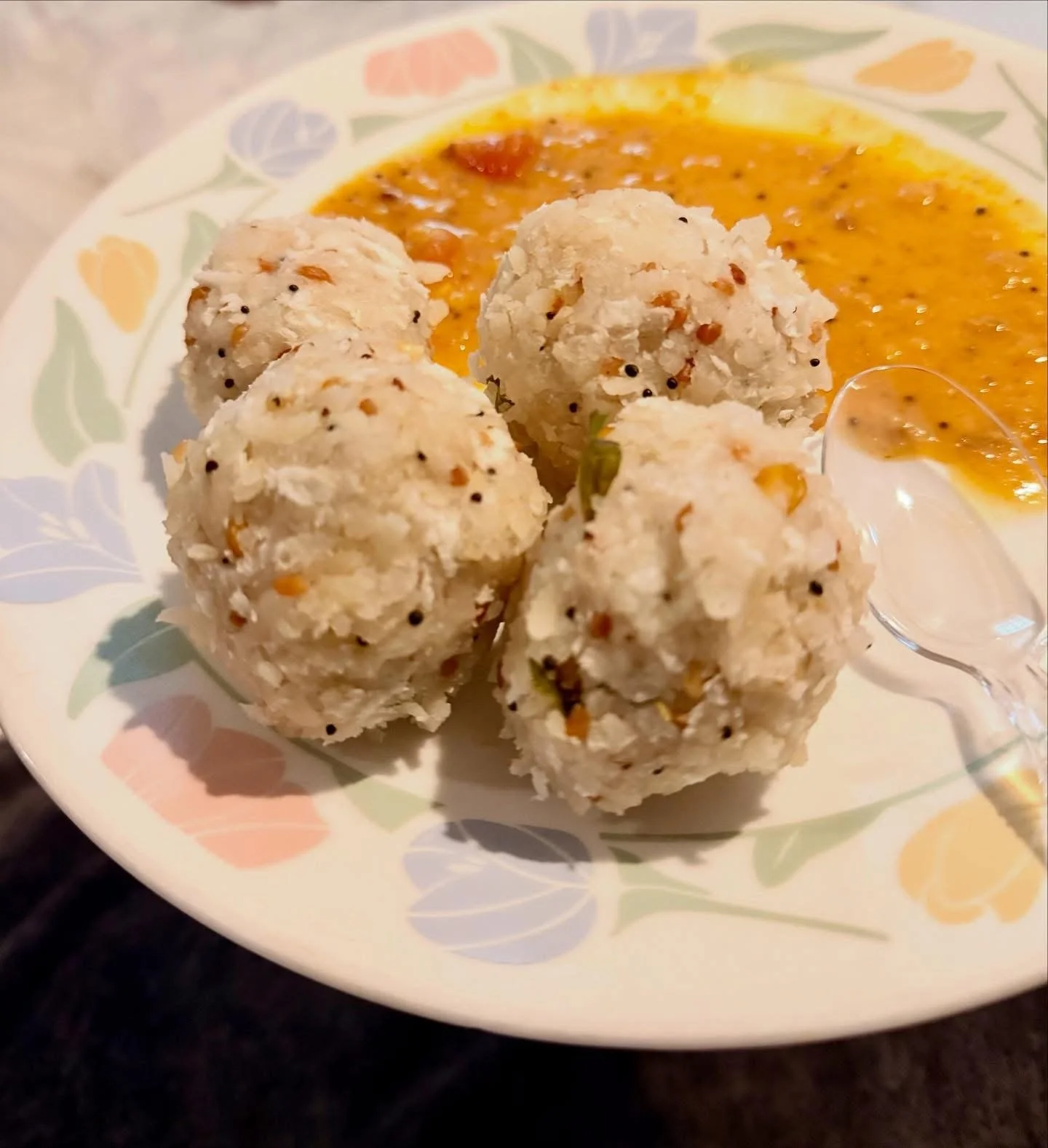
Mahalaya Palagaram - Kara Aval Kozhukattai
Savoury Aval Kozhukattai /
Soft like pidi kozhukattai, but instant with aval. No green chilies.
Ingredients:
• 1 cup thick aval / poha / red aval
• 3/4 cup water
• Salt to taste
• 1/4 cup grated fresh coconut
• 2 tbsp raw rice flour - for binding, optional
For tempering:
• 2 tsp coconut oil or ghee
• 1/2 tsp mustard seeds
• 1 tsp cumin seeds
• 1 1/2 tsp cracked black pepper
• 1 tbsp grated fresh ginger
• Few curry leaves finely chopped
• 1 tsp urad dal - optional
• 1 tbsp grated coconut for tempering
Mahalaya adapted: No green chilies, no red chilies, no asafoetida. Only pepper and ginger for heat.
Method:
1. Soak aval
Wash thick aval 2 times. Soak in water just to cover for 10 minutes. Drain fully. If using thin aval, just wash and drain, no soaking.
2. Temper
Heat coconut oil or ghee in a pan. Add mustard seeds, when it crackles add urad dal, cumin seeds and cracked pepper. Fry till dal turns light golden.
Add grated ginger, curry leaves and 1 tbsp grated coconut. Sauté for few seconds.
3. Cook aval
Add 3/4 cup water and salt to the same pan. Bring to a boil.
Add drained aval, 1/4 cup grated coconut and raw rice flour if using. Mix well on low flame for 2 to 3 minutes till water is absorbed and mixture comes together like soft upma dough and leaves sides.
Switch off. Cover for 2 minutes. Let it become warm enough to handle.
4. Shape
Grease palms with ghee or oil. Take small portion and shape into small oblong balls or small modaks. If it cracks, wet your fingers and shape.
5. Steam
Grease steamer plate with oil. Place kozhukattai and steam for 10 to 12 minutes on medium flame.
Serve hot with coconut chutney made without chilies.
Tips:
• Water should be only 3/4 cup for 1 cup thick aval, otherwise it becomes mushy.
• Adding little raw rice flour helps to hold shape, but you can skip if aval is thick variety.
• For extra softness, add 1 tsp ghee while mixing aval dough.
25.vella Dosai ( jaggery dosa )
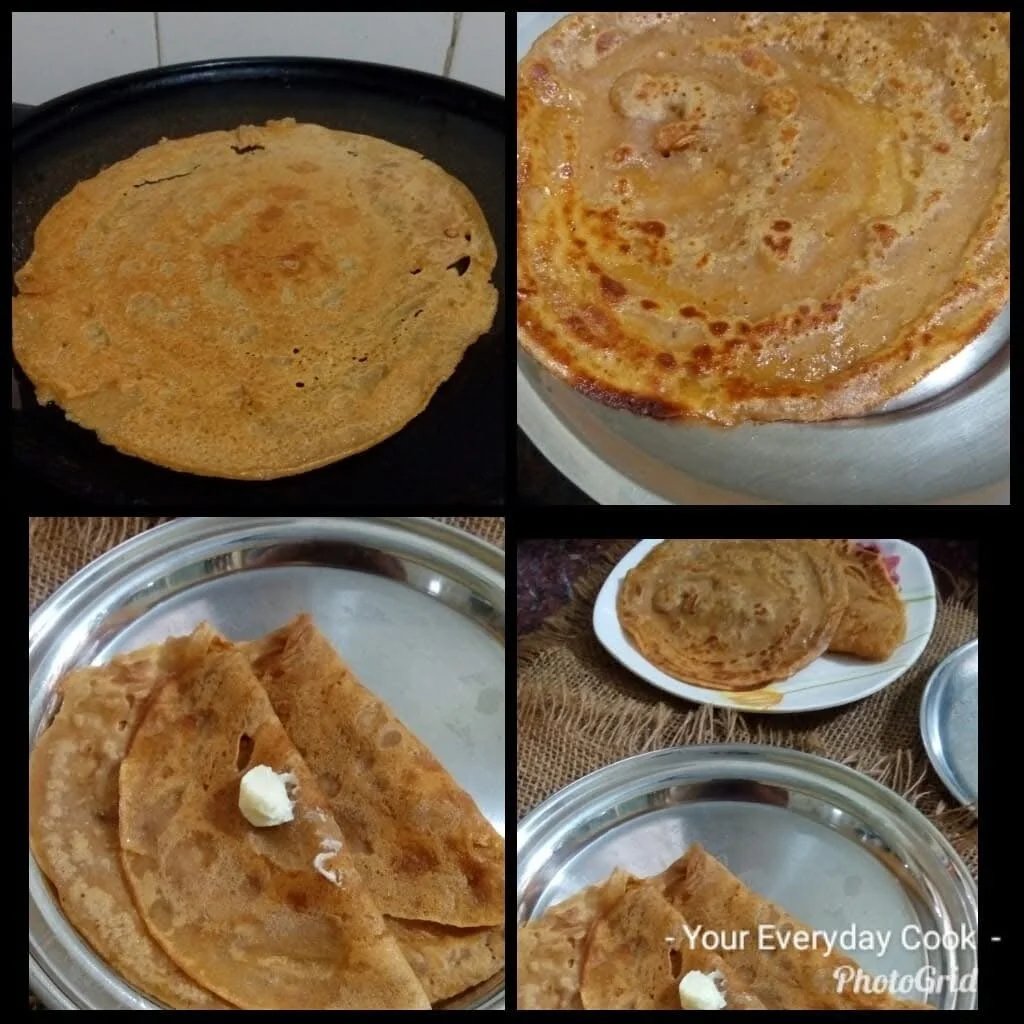
Mahalaya Palagaram - Vella Dosai
Mild Sweet Jaggery Dosa / Fav for elders and kids
Soft, ghee-roasted sweet dosa - not too sweet, perfect for a change during Mahalaya.
Ingredients:
• 1 cup wheat flour OR millet flour
• 2 tbsp raw rice flour - use raw rice flour only, not parboiled, for Mahalaya
• 1/2 cup powdered jaggery - reduced for mild sweet, if you want more sweet use 3/4 cup
• 3/4 cup water - to melt jaggery
• Pinch of salt
• Pinch of cardamom powder / elakkai powder
• 3 tbsp grated fresh coconut - optional but recommended
• Water as needed to make batter
• Ghee or coconut oil to roast
To serve: little ghee or unsalted butter
Method:
1. Melt jaggery
Powder jaggery. Heat 3/4 cup water, add jaggery and melt on low flame. No need for string consistency. Filter to remove impurities and cool completely. Batter should be made with cooled jaggery water, not hot.
2. Make batter - minor correction
In a bowl take wheat flour or ragi flour and raw rice flour, pinch of salt, cardamom powder and grated coconut. Mix.
Add cooled, filtered jaggery water and mix without lumps. Then add little more plain water to make a thin, flowing batter like neer dosa / rava dosa consistency.
Correction: Batter should NOT be thick dosa batter. Thick batter will make Vella Dosai hard and chewy. It should be thin and pourable.
Rest batter for 10 minutes.
3. Make dosa
Heat dosa tava on medium flame, not very high. High heat will burn jaggery quickly.
Grease tava lightly with ghee. Pour a ladle of batter from outer to center like rava dosa and fill gaps. Do not spread with ladle.
Drizzle little ghee around edges. Cook on low-medium flame till golden brown, flip and cook other side also till done. Both sides should be roasted.
Make small, soft dosas - not very big and paper-thin. Small dosas stay soft.
4. Serve
Serve hot with little ghee or butter on top. Should be eaten hot, as it becomes slightly firm on cooling.
Tips for soft Vella Dosai:
• For mild sweet for elders and kids, 1/2 cup jaggery for 1 cup flour is perfect.
• Ragi flour version needs little more water than wheat flour version.
• Always cook on low-medium flame. If tava is too hot, sprinkle water and wipe before next dosa.
• If batter becomes too thick after resting, add little water - jaggery and millet flour absorb water.
Mahalaya Palagaram - Instant Rice Flour Coconut Dosa
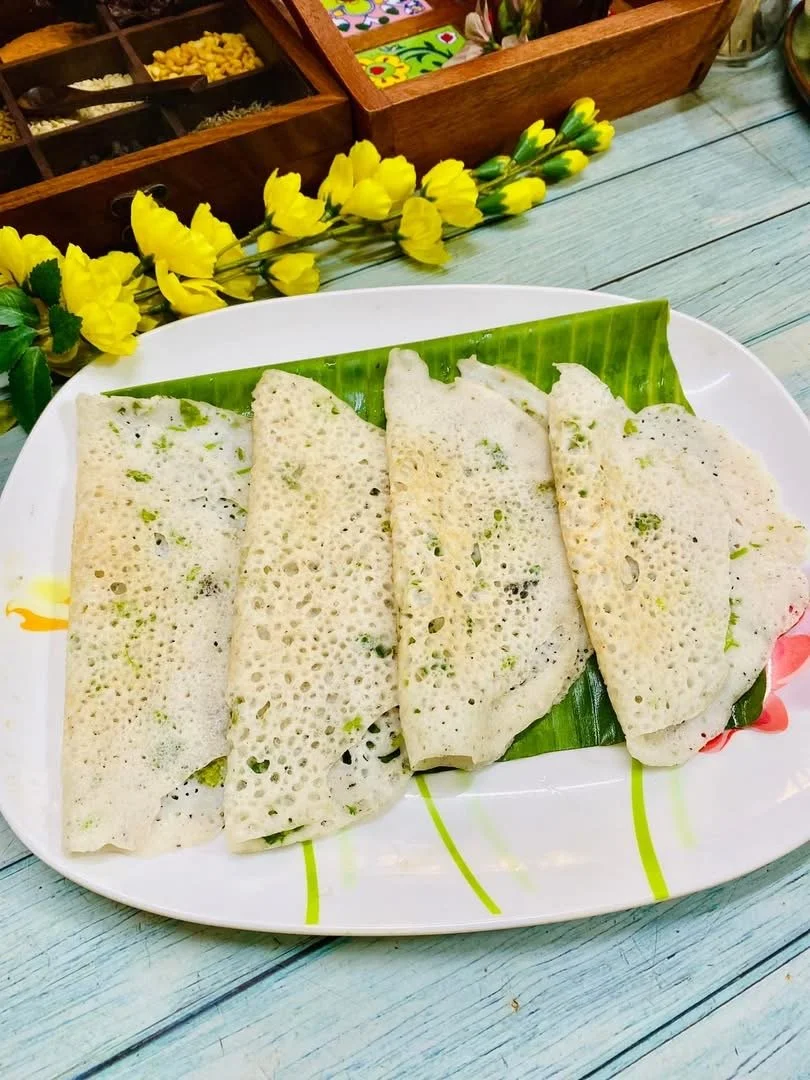
Mahalaya Palagaram - Instant Rice Flour Coconut Dosa
For Mahalaya, a light and comforting palagaram that needs no fermentation or planning.
This is a simple and delightful two-ingredient recipe and one of my favorites. Instant Rice Flour Coconut Dosa, cooked instantly without any need for fermentation or batter resting. You can also call it Neer Dosa, given the similarities.
You can use millet flour in place of rice flour too, it gives similar results. I have prepared these earlier with barnyard millet flour and they give almost the same soft result.
This dosa uses only rice flour and grated fresh coconut, perfect for busy mornings and lunch boxes, as these thin dosas remain soft for hours. If you are wondering what to prepare for quick breakfast or afternoon tiffin during the festive days, this can be a wonderful option, better than rava dosa.
Ingredients:
• 1 cup raw rice flour
• 1/2 cup grated fresh coconut
• Salt to taste
• Water - about 2 cups or more, as needed
• Optional: chopped coriander leaves and green chilies for flavor or only curry leaves .
Method:
1. Blend rice flour and grated coconut with 2 cups of water to get a thin batter resembling a thick milkshake. Adjust consistency with more water and add salt.
2. To enhance the flavour, I add some chopped coriander leaves and green chilies. Totally optional, but it does make pretty dosas.
3. Heat a griddle, pour the batter around the pan, cover and cook. Use ghee or oil if desired, these dosas generally require minimal oil.
4. Flip and cook both sides if you prefer.
Serve hot with coconut milk curries, veg stews or chutneys.
Horsegram dosa ( Mahalaya Palagaram special ) Kollu Dosai
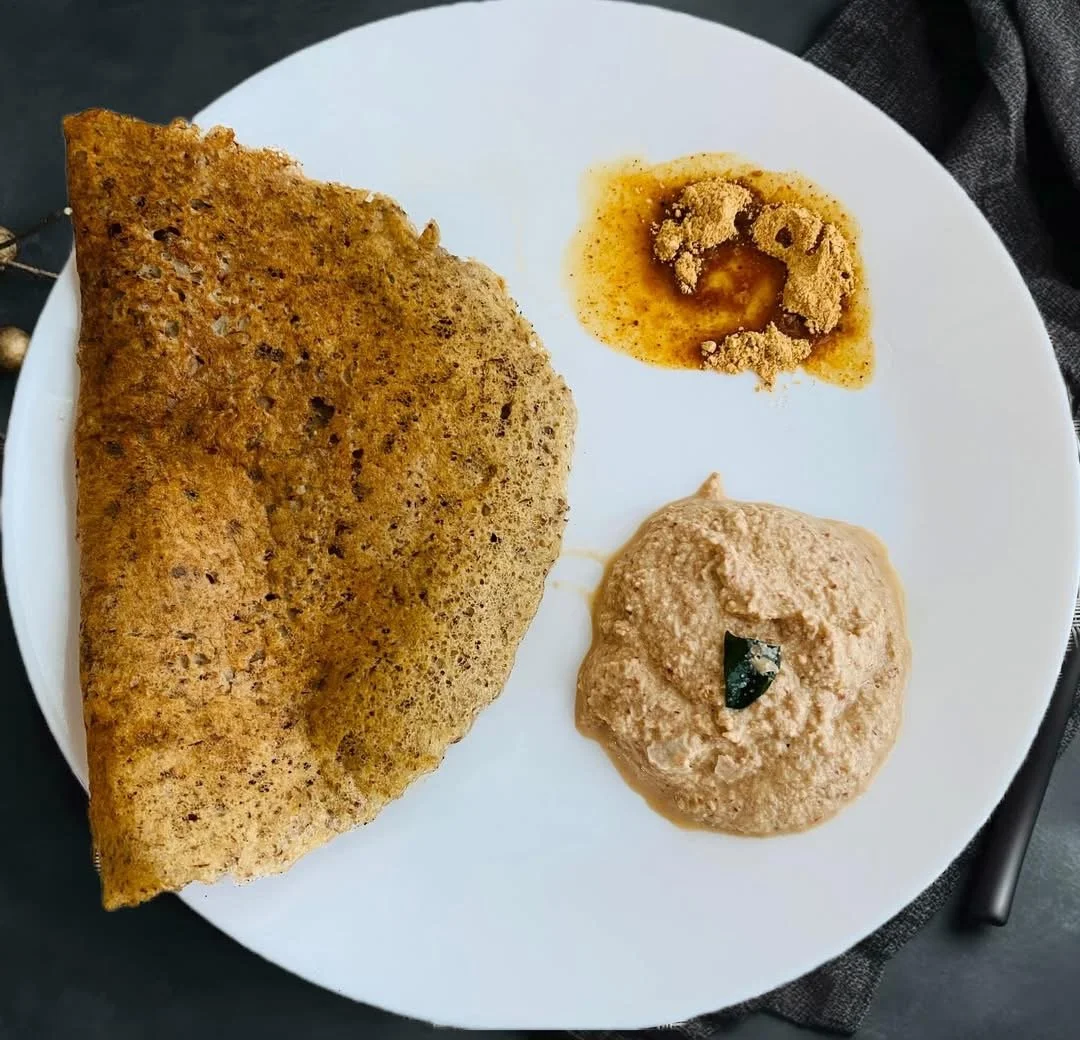
Mahalaya Palagaram - Kollu Dosai:
A light, protein-rich palagaram for Mahalaya — no fermentation needed and perfect for the festive days.
This kollu dosai is wholesome, filling and very easy to make. The batter is ground to a smooth, thick consistency and makes excellent dosas immediately, without any fermentation. The texture is soft inside with a light crispness outside, similar to pesarattu.
Ingredients:
• 1 cup kollu / horse gram
• 1/2 cup raw rice or dosa rice
• Salt as required
• Water as needed to grind
Optional tempering for flavour:
• 1 tsp oil, mustard seeds, cumin, curry leaves, finely chopy curry leaves and ginger
Method:
1. Wash and soak kollu and raw rice together for 6 to 8 hours or overnight.
2. Drain and grind to a smooth, thick batter. Add water little by little, the batter should be like regular dosa batter, not too watery.
3. Transfer to a bowl, add required salt and mix well.
4. If you like, add a simple tempering of mustard, cumin, curry leaves, green chili and ginger for extra flavour.
5. Prepare dosas immediately. There is no need to ferment, the batter makes excellent dosas as it is.
6. Heat a griddle, pour a ladleful of batter and spread lightly. Drizzle a little oil or ghee and cook till golden.
Note: If you prefer, you can rest the batter in the fridge for slow fermentation for a few hours. It still gives a soft texture similar to pesarattu.
Serve hot with coconut chutney or any simple chutney of your choice.
Pacharsi idli ( raw rice idli )
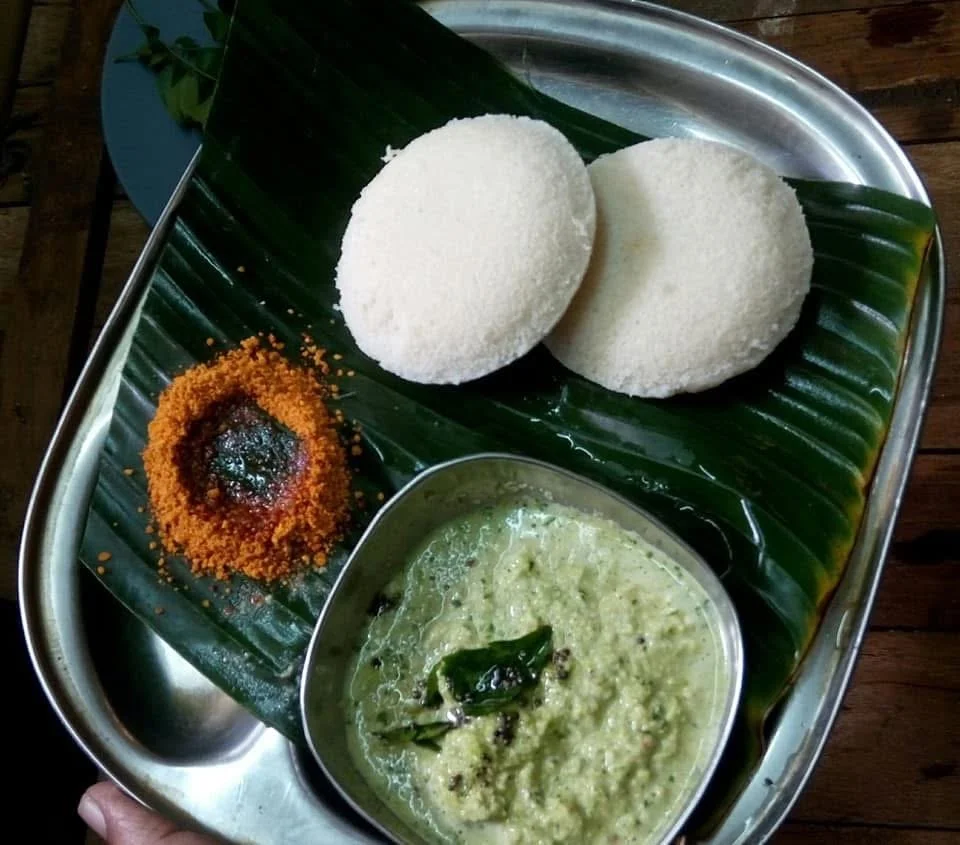
Mahalaya Palagaram - Pachaiarisi / Raw Rice Idli
Soft, fluffy and light — a perfect palagaram for Mahalaya. This Pachaiarisi Idli stays so soft even without adding cooked rice or poha.
Ingredients:
• 2 cups raw rice / pachaiarisi, washed and soaked in hot water for 3 to 4 hours
• 1 cup urad dal / ulutham paruppu, washed and soaked for 3 hours
• 1 tsp methi seeds / vendhayam or curd
• Salt as required
• Oil to grease idli plates
Method:
1. Wash raw rice and soak it in hot water for 3 to 4 hours. In a separate bowl, wash urad dal and methi seeds and soak for 3 hours.
2. First, grind urad dal and methi seeds together to a smooth, shiny and thick batter. Use cold water little by little while grinding.
3. Next, grind the soaked raw rice to a smooth, slightly grainy batter.
4. Mix both batters well together in a large vessel. Cover and keep for fermentation for 8 to 10 hours or overnight, depending on the weather.
5. After fermentation, add salt and mix gently. Do not overmix.
6. Grease idli plates with oil and pour batter into each mould.
7. Steam for 7 to 8 minutes or till done. Check with a toothpick.
Serve these soft, pillowy Pachaiarisi Idlis hot with your preferred accompaniment — coconut chutney, sambar or milagai podi.
Kodo millet upma | Varagu Arisi upma
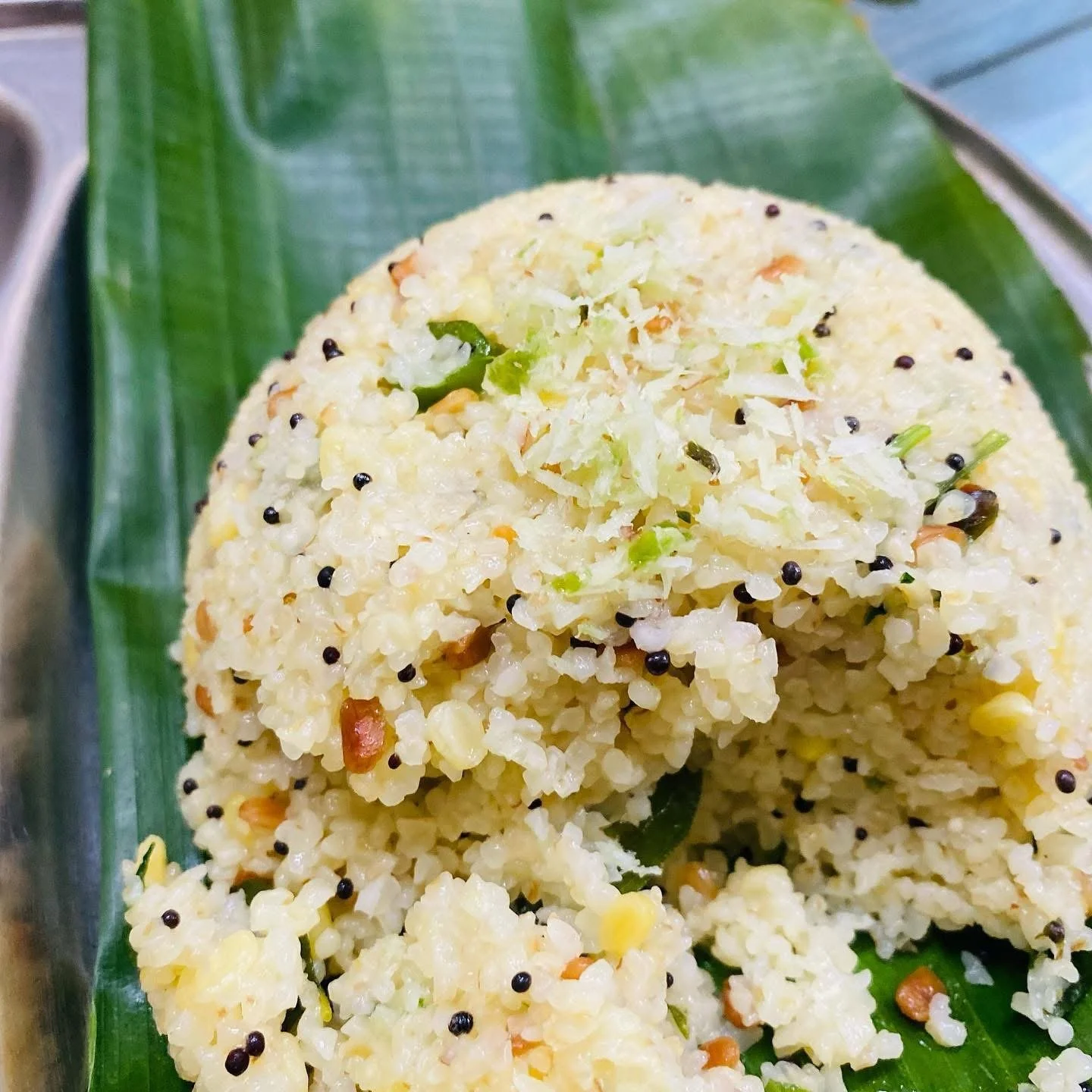
Mahalaya Palagaram - Varagu / Kodo Millet & Moong Dal Upma
For Mahalaya, I like to keep the palagaram light, sattvic and comforting. This Varagu and Pasi Paruppu Upma is perfect for that — gluten free, protein rich, easy to digest and so filling without being heavy. It stays soft for a long time, so it is also great for morning tiffin and lunch boxes.
Ingredients:
• 1 cup kodo millet / varagu arisi
• 1/2 cup split yellow moong dal / pasi paruppu
• 3.5 cups water
• Salt as required
For tempering:
• 2 tsp oil + 1 tsp ghee
• 1 tsp mustard seeds
• 1 tsp urad dal
• 1 tsp grated ginger
• 2 green chilies, slit or chopped or use pepper for Mahalaya
• 8 to 10 curry leaves
• A pinch of hing / asafoetida - optional
• 2 tbsp grated fresh coconut for garnish
• Coriander leaves to garnish
Method:
1. Wash kodo millet and moong dal together 2 to 3 times. Drain completely. You can soak for 20 to 30 minutes for softer texture, though it is not essential.
2. Dry roast the washed millet and dal in a pan on low heat for 2 to 3 minutes till aromatic. This keeps the upma fluffy and not sticky. Keep aside.
3. In the same pan, heat oil and ghee. Add mustard seeds and let it splutter. Add chana dal and urad dal and roast till golden.
4. Add ginger, curry leaves and hing.
5. Add 3.5 cups water and required salt. Bring to a rolling boil.
6. Add the roasted varagu and moong dal mix. Stir gently, cover and cook on low to medium heat for 12 to 15 minutes till water is absorbed and millet is soft.
7. Switch off, add grated coconut and coriander leaves. Mix gently, cover for 5 minutes.
Serve hot with coconut chutney or just curd. For Mahalaya, I serve it with a little ghee on top — simple, nourishing and very comforting.
30 . Red rice poha puttu
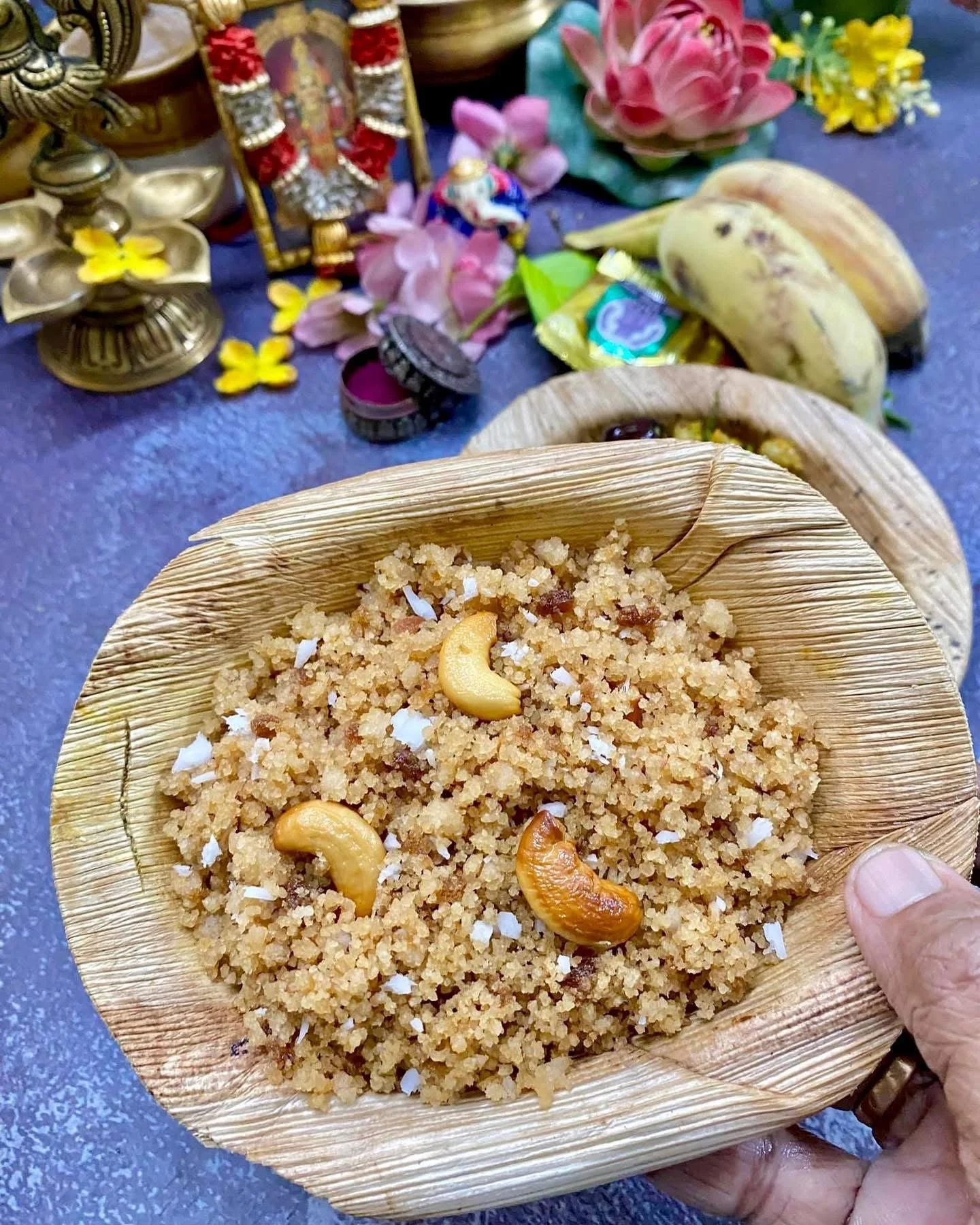
Mahalaya Palagaram - Sigappu Aval / Red Rice Poha Sweet Puttu
A quick, no-rice-flour sweet puttu for Mahalaya — made with fiber-rich red rice poha, jaggery and coconut. Very light, naturally sweet and perfect as neivedyam or evening tiffin. No puttu maker needed.
Ingredients:
• 1 cup red rice poha / sigappu aval
• 3/4 cup grated fresh coconut
• 1/2 to 3/4 cup powdered jaggery, adjust to taste
• 1/4 tsp cardamom powder
• A pinch of salt
• 1 tsp ghee
• 2 tbsp water if needed
• Optional: 1 tbsp chopped cashews and raisins roasted in ghee
Method:
1. Wash red rice poha gently once or twice and drain completely. Do not soak for long, just let it sit in the strainer for 10 minutes to soften.
2. In a bowl, add the softened poha, grated coconut and a pinch of salt. Mix lightly with your fingertips till well combined. If it feels very dry, sprinkle 2 tbsp water.
3. Transfer to a steamer plate or idli plate and steam for 5 to 7 minutes till soft and fluffy. This step keeps the puttu soft and not sticky.
4. Meanwhile, warm jaggery with 2 tbsp water just till it melts. No need for syrup consistency, just melt and strain to remove impurities.
5. Transfer steamed poha-coconut mix to a wide bowl while still warm. Add melted jaggery, cardamom powder and ghee. Mix gently.
6. Finally add roasted cashews and raisins if using.
Serve warm. This stays soft for hours and is a lovely sweet palagaram for Mahalaya — light, wholesome and comforting with the goodness of red rice.
Tip: If your red poha is thick, pulse it once in the mixer to a slightly coarse texture before mixing with coconut.
Vazhakkai / Raw plantain Tikki
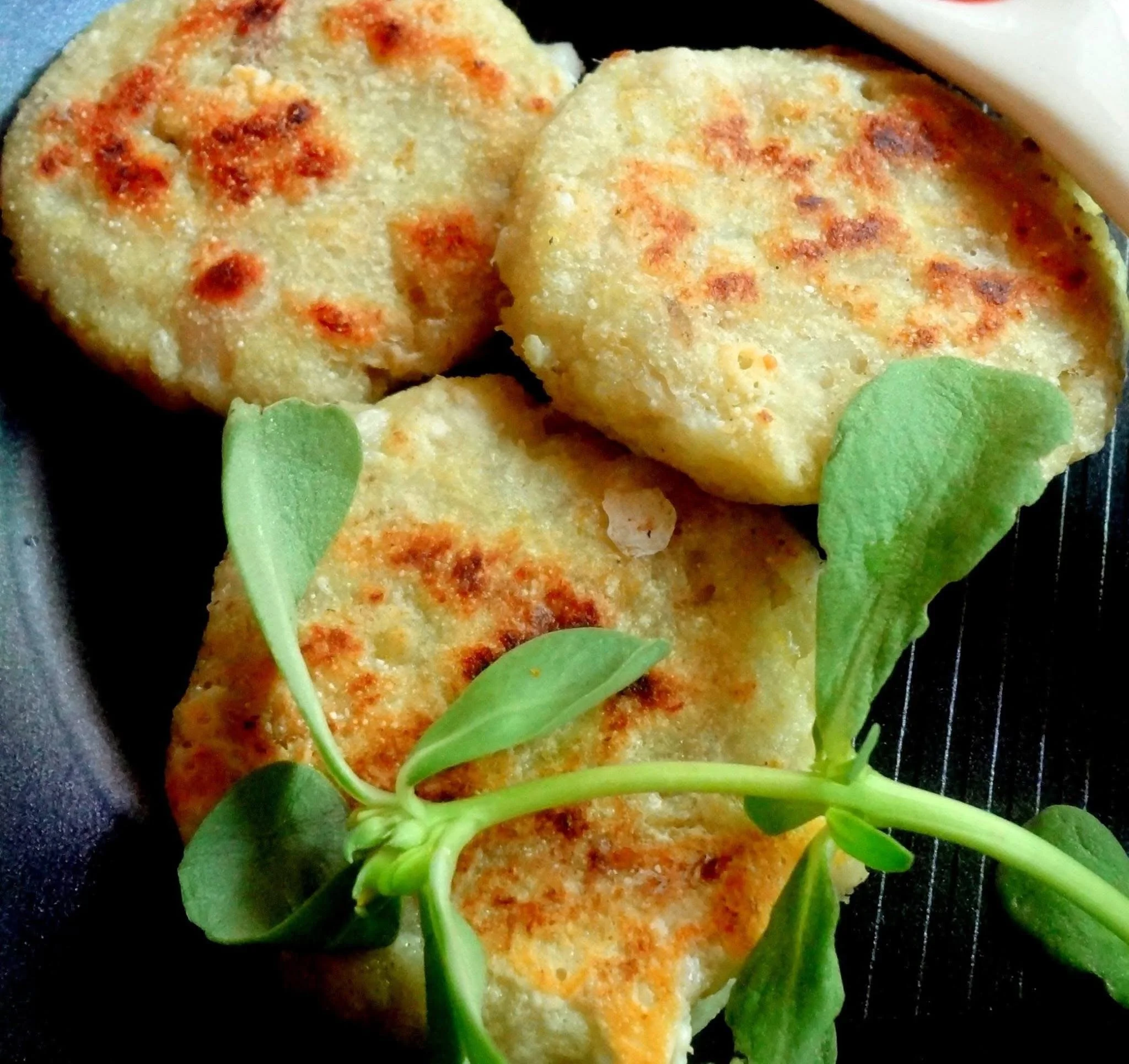
Mahalaya Palagaram - Vazhakkai Tikki
A very light and unusual tiffin for Mahalaya. Just raw plantain, mild spices and rice flour, tawa fried till crisp. Soft inside, crisp outside.
Ingredients:
• 2 medium raw plantain / vazhakkai
• 3 to 4 tbsp raw rice flour or idiyappam flour for binding
• 2 tbsp grated fresh coconut
• 1 tsp grated ginger
• 1/2 tsp cumin seeds
• 1/2 tsp coarsely crushed black pepper
• 8 to 10 curry leaves, finely chopped
• 2 tbsp coriander leaves, finely chopped
• Salt as required
• Oil or ghee for tawa frying
Method:
1. Wash raw plantain and boil with skin in water or pressure cook for 2 whistles till just soft. Do not overcook.
2. Peel when warm and mash well while still warm. There should be no lumps.
3. Add rice flour, grated coconut, ginger, cumin, crushed pepper, curry leaves, coriander leaves and salt.
4. Mix gently to a soft dough. If it feels sticky, add a little more rice flour. No need to add water.
5. Divide into small equal balls and flatten into tikkis.
6. Heat a tawa on medium heat, add a little oil or ghee and shallow fry tikkis on both sides till golden and crisp. Press lightly with spatula while frying.
Serve hot as it is or with plain coconut chutney or curd. This stays light, mildly spiced and very comforting for a festive tiffin.
33.Bansi Rava Coconut dosa
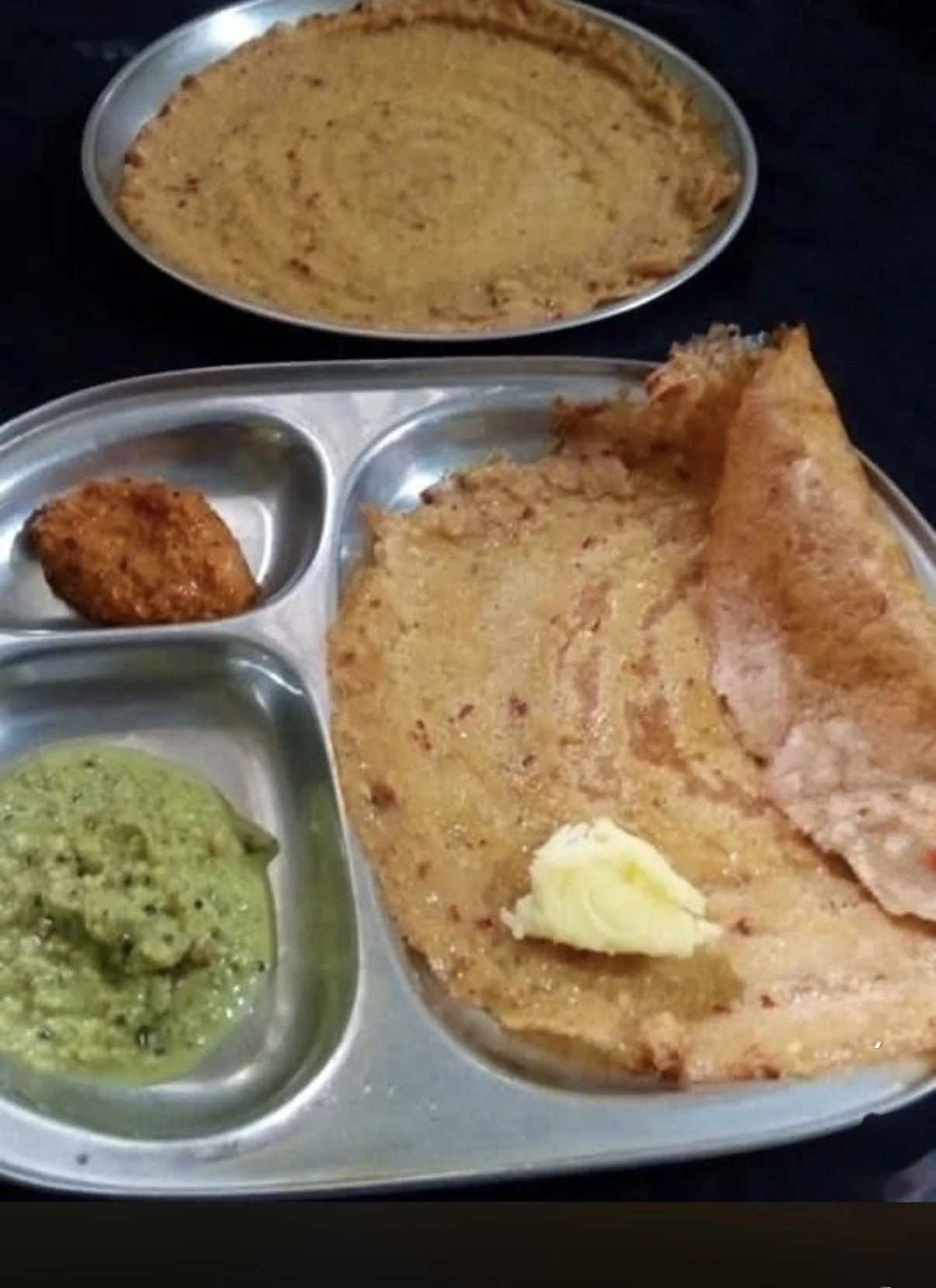
Mahalaya Palagaram - Bansi Rava & Moong Dal Dosa
A quick, spicy adai style dosa for Mahalaya — no fermentation, no waiting. Made with bansi rava, moong dal and coconut, it is light, protein rich and very comforting as a festive tiffin.
Ingredients:
• 1 cup bansi rava, soaked for 1 hour
• 1/4 cup yellow moong dal / pasi paruppu
• 1/4 cup grated fresh coconut
• A pinch of pepper powder
• Salt as required
• Few curry leaves, finely chopped
• Water as needed to grind
• Oil or ghee for making dosas
Method:
1. Wash bansi rava and soak in enough water for 1 hour. Wash moong dal and soak separately for 1 hour.
2. Drain both. Grind bansi rava, moong dal and coconut together to a smooth paste. Add water little by little as needed.
3. Transfer batter to a bowl. Add salt, pepper and chopped curry leaves. Mix well. Batter should be like regular adai dosa batter, smooth and slightly thick but spreadable.
4. No need to ferment. You can prepare dosas immediately.
5. Heat a tawa, pour a ladleful of batter and spread lightly like an adai dosa. Drizzle oil or ghee and cook till golden and crisp on both sides.
Serve hot with coconut chutney or any chutney of your choice. Makes a light, wholesome palagaram for Mahalaya.
Karuppu Ulundh Adai | Black Udad dal Adai
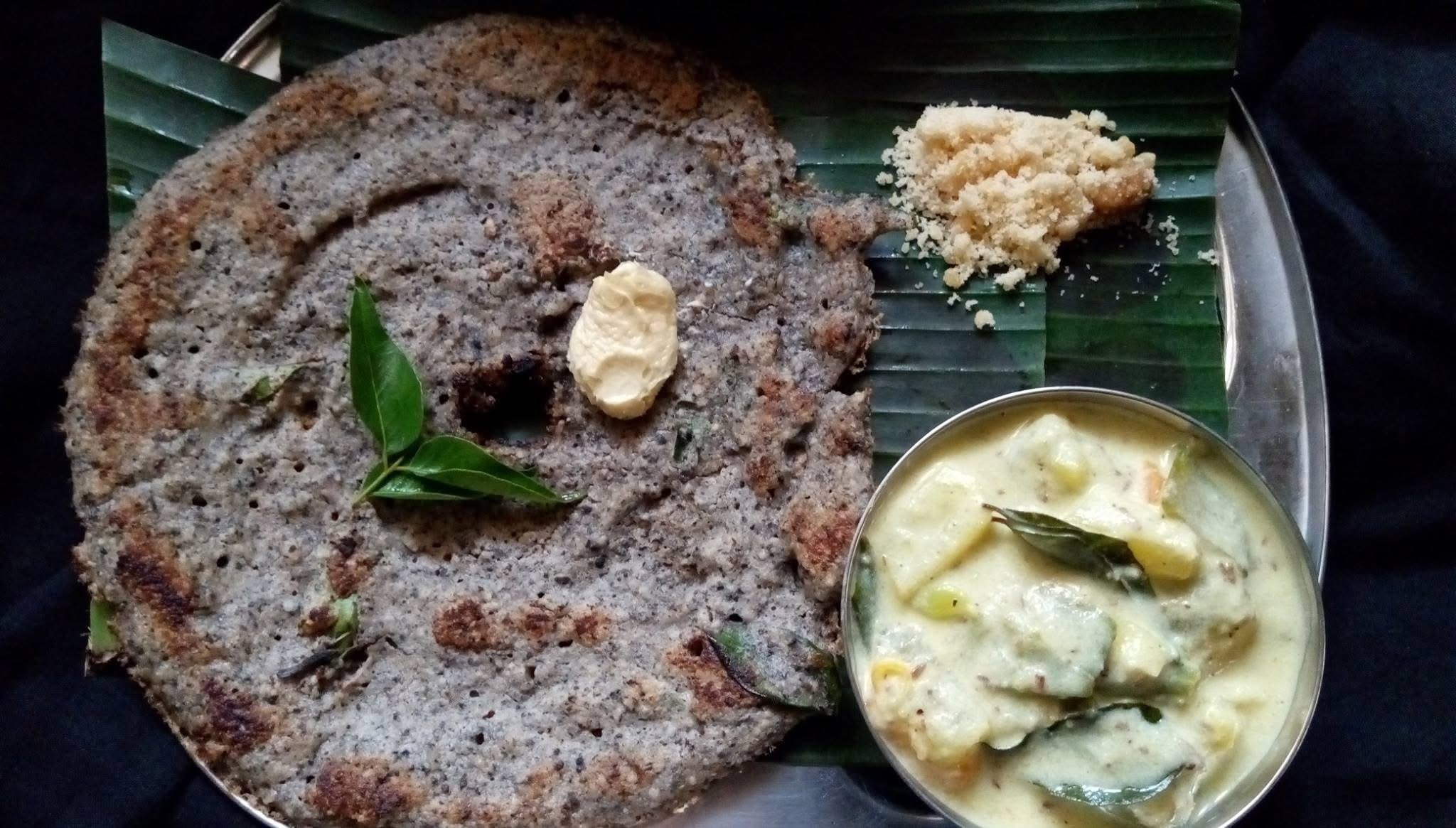
Mahalaya Palagaram - Karuppu Ulundhu / Black Gram Adai with Pachaiarisi
This adai is made with karuppu ulundhu with skin and raw rice only, no parboiled rice. It is earthy, protein rich and very filling, perfect as a festive palagaram. You can make it immediately, no fermentation needed.
Ingredients:
• 1 cup karuppu ulundhu / black urad dal with skin
• 1 cup raw rice / pachaiarisi
• 1 tsp cumin seeds
• 1/2 tsp black pepper
• A pinch of hing / asafoetida ( optional for Mahalaya Palagaram)
• Salt as required
• Few curry leaves, finely chopped
• 2 tbsp grated coconut - optional
• Water as needed to grind
• Oil or ghee for making adai
Method:
1. Wash karuppu ulundhu and raw rice together 2 to 3 times. Soak in enough water for 3 to 4 hours.
2. Gtind with cumin and pepper to a slightly coarse adai batter. Do not grind to a very smooth paste, a little coarse texture gives the best adai. Add water little by little.
3. Transfer batter to a bowl. Add salt, hing, chopped curry leaves and grated coconut if using. Mix well. Batter should be thick but spreadable, like regular adai batter.
4. No need to ferment. You can make adai immediately.
5. Heat a tawa, pour a ladleful of batter and spread lightly thicker than dosa. Make a small hole in the center, drizzle oil or ghee and cook on medium heat till golden and crisp on both sides.
Serve hot with jaggery, butter, coconut chutney or avial. This adai stays soft inside with a nice crispness from the black skin of the dal, very comforting for Mahalaya.
Barnyard millet / Kuthiraivali ghee dosa
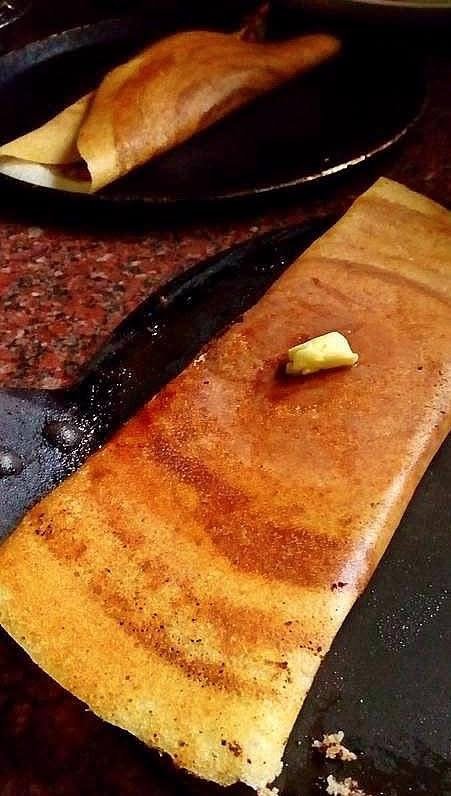
Mahalaya Palagaram - Kuthiraivali / Barnyard Millet Ghee Dosa
This is a soft inside, crisp outside ghee dosa made only with barnyard millet and urad dal. Very light for festive days and stays crisp when roasted in ghee.
Ingredients:
• 1.5 cups barnyard millet / kuthiraivali / varai / samvat
• 1/2 cup urad dal / ulutham paruppu
• Salt as required
• Water as needed to grind and soak
• Ghee for roasting dosas
If you want a little extra crispness, you can add 1/4 cup raw rice / pachaiarisi. Fully optional. No need for parboiled rice.
Method:
1. Wash barnyard millet and urad dal separately. Soak millet for 4 to 5 hours. Soak urad dal separately for 3 to 4 hours.
2. Grind urad dal first to a smooth, fluffy batter adding water little by little.
3. Next grind soaked barnyard millet to a smooth batter. If you are adding raw rice, grind it along with the millet.
4. Mix both batters together in a large vessel. Cover and keep for fermentation for 8 to 10 hours or overnight.
5. After fermentation, add salt and mix gently. Batter should be like regular dosa batter, not too thick.
6. Heat a tawa on medium heat. Pour a ladleful of batter and spread to a slightly thick dosa. Drizzle ghee around and on top. Roast till golden and crisp.
Serve hot with coconut chutney, milagai podi or jaggery. Makes a light, aromatic and completely sattvic palagaram for Mahalaya.