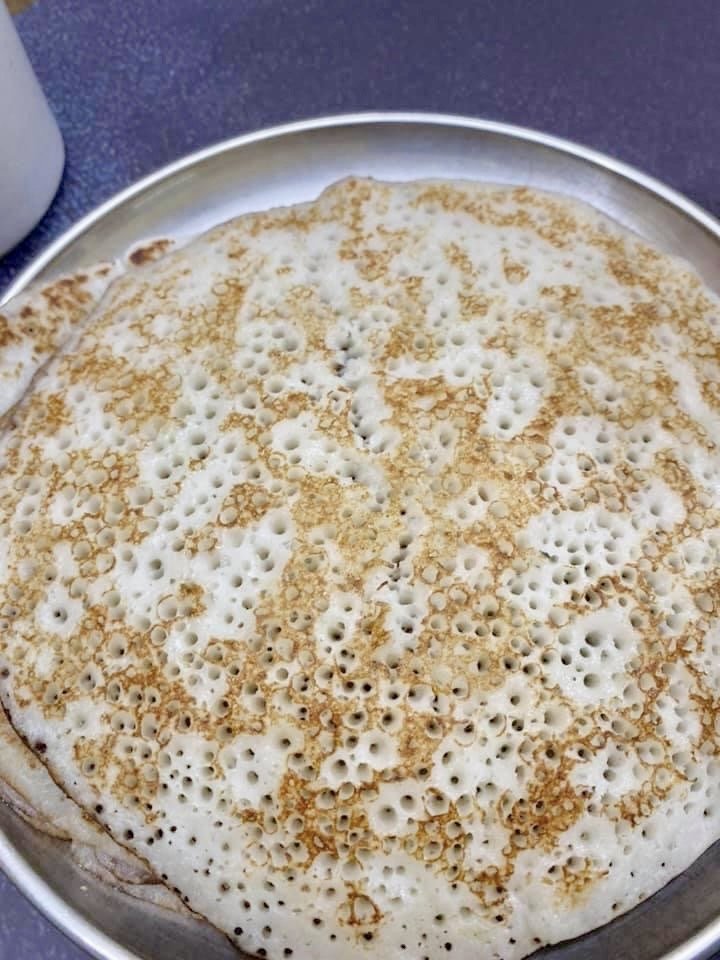
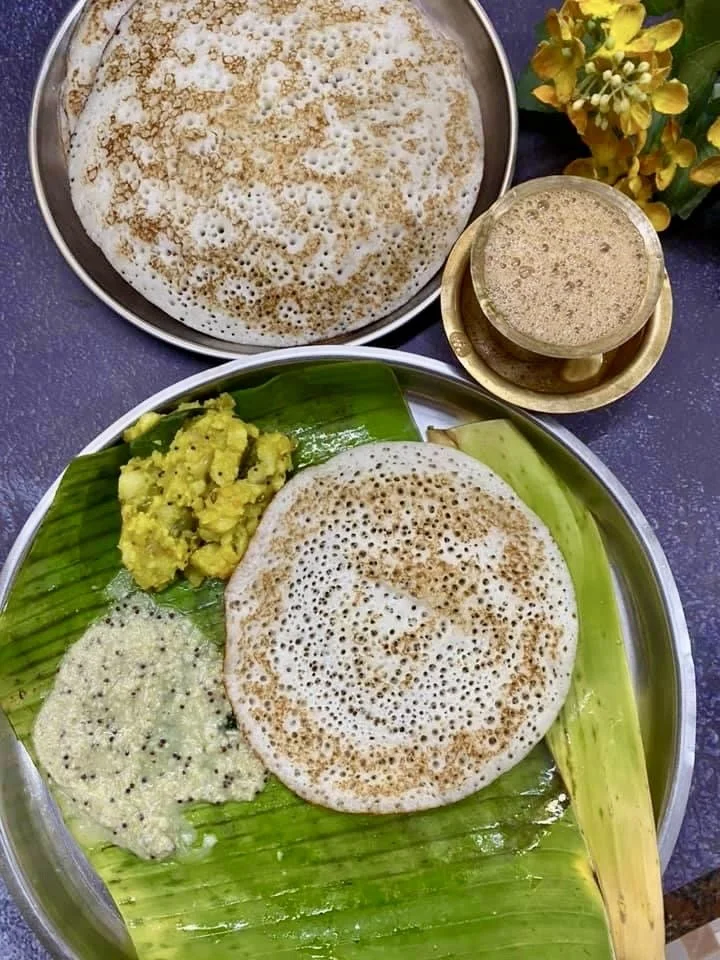
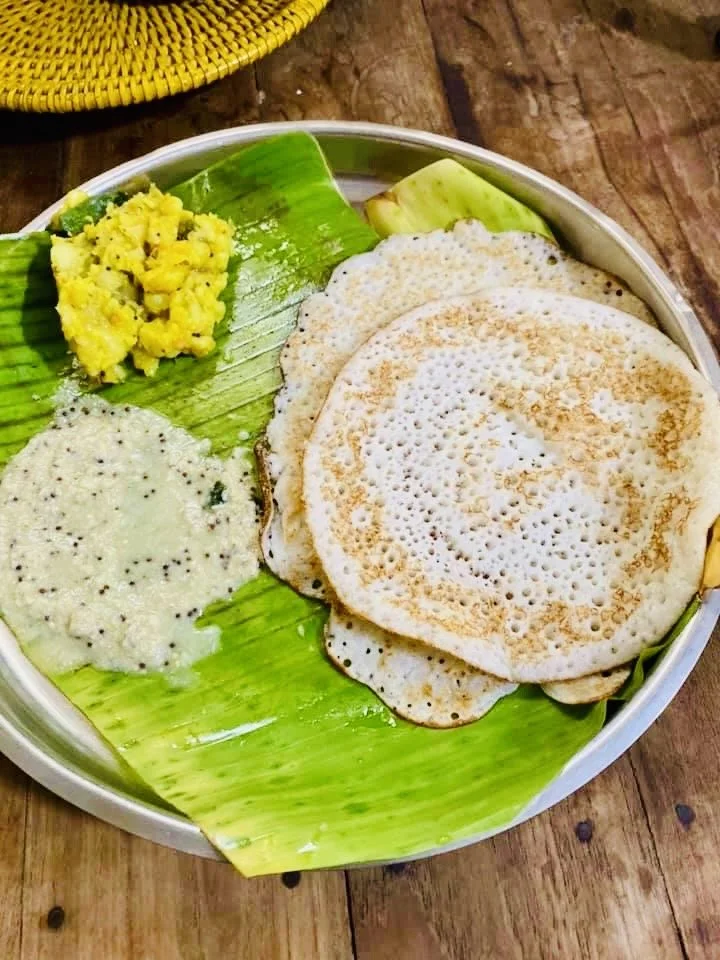
Khaali Dosey
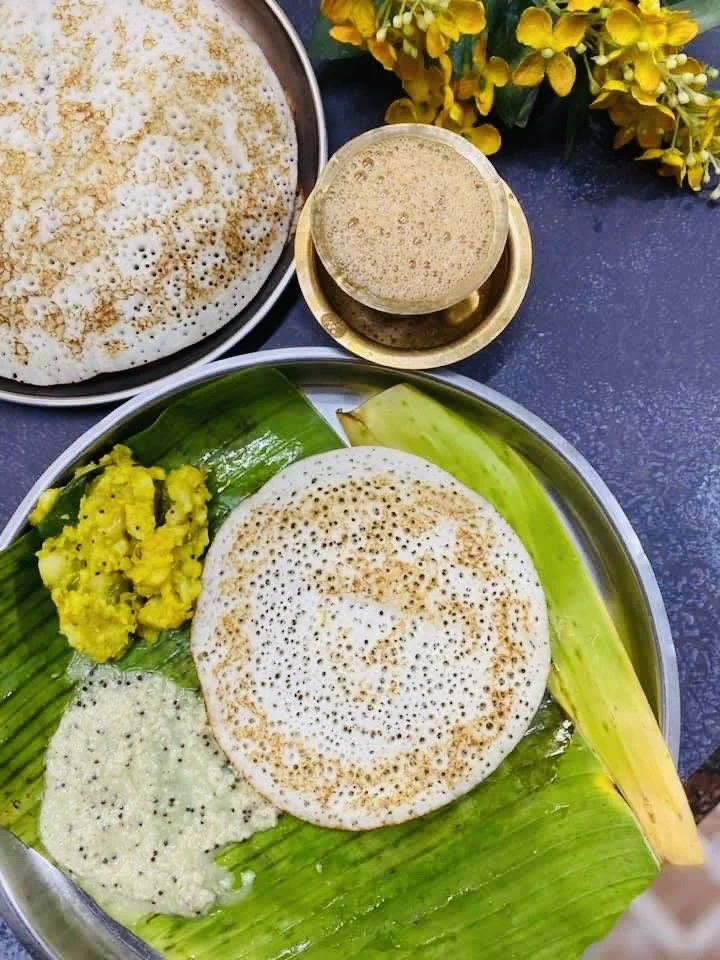
Bangalore dosa variety :
Khaali dosey is yet another one of Dosey variety from Bengaluru where one cannot just find ordinary dosa . There are so many varieties that it tempts one to try them all one by one . I have tried this and find it very different and worth making at home .
Khaali dosey is a beloved South Indian breakfast, known for its lacy, porous texture and light crisp bite. Unlike a regular dosa, it's not spread thin with the back of a ladle — the batter is poured onto a hot tava and left to spread on its own, forming natural little pores as it cooks. The result is a dosa that's thicker than a neer dosa but thinner than your everyday dosa, with a delicate crunch that pairs beautifully with chutney and potato palya.
There are two ways to make this batter — using dry flours, or grinding fresh dals and rice. Both give you the same classic khaali dosey.
Method 1: Using Dry Flours
Ingredients:
• 6 cups rice flour
• 3/4 cup maida
• 1 cup urad dal flour
• 1 tbsp methi (fenugreek) flour
• 1 cup avalakki (poha/flattened rice)
• 1/2 cup rava (sooji)
• 1/4 cup curd (optional — not required if you're using the wet-ground method instead)
Method
1. Powder the dry ingredients. Blend the rice flour, maida, urad dal flour, methi flour, avalakki, and rava together into a fine powder.
2. Make the batter. Transfer the ground powder to a large bowl. Add curd and water gradually, mixing well to form a thick dosa batter. Work out every lump until the batter is completely smooth.
3. Ferment. Cover and let the batter ferment overnight.
4. Adjust consistency. The next day, stir in a little water and salt. The batter should be thicker than neer dosa batter but thinner than a regular dosa batter — pourable, but not watery.
5. Cook. Pour a ladleful onto a hot tava without spreading it — the batter will spread on its own, creating the signature small pores across the surface. Spread very lightly with the back of the ladle only if needed. The dosas will come out slightly thicker than a regular dosa.
6. Finish. Flip and cook on both sides until golden. Drizzle with ghee for extra flavour.
7. Serve hot, with chutney and potato palya.
Method 2: Wet-Ground, Traditional Style
Ingredients
• 3 cups rice
• 1 cup split urad dal
• 2 cups kusubalakki (light red rice)
• 3/4 cup maida
• 1/2 cup rava
• 1 cup rice flour
• 1 cup avalakki
• 1 tbsp menthe (fenugreek) seeds
Method
1. Soak. Soak the rice, kusubalakki, urad dal, and menthe seeds together for 5 hours. Wash and soak the avalakki separately.
2. Grind. Add the soaked avalakki in while grinding the dal mixture, and grind everything to a smooth batter.
3. Add dry ingredients. Mix in the maida, rice flour, and rava. There's no need to add curd for this method.
4. Ferment. Cover and allow the batter to ferment.
5. Adjust consistency. Add salt before making dosas. This batter must be thinner than a normal dosa batter, since it's poured onto a hot tava and spreads on its own.
6. Cook and serve the same way as Method 1 — pour without spreading, flip, cook both sides, finish with ghee, and serve with chutney and potato palya.